Poço Azul, in Chapada Diamantina: a cave discovered in 1995, breathtakingly clear water, and a full guide on how to visit.
Why Is Poço Azul a Must-See?
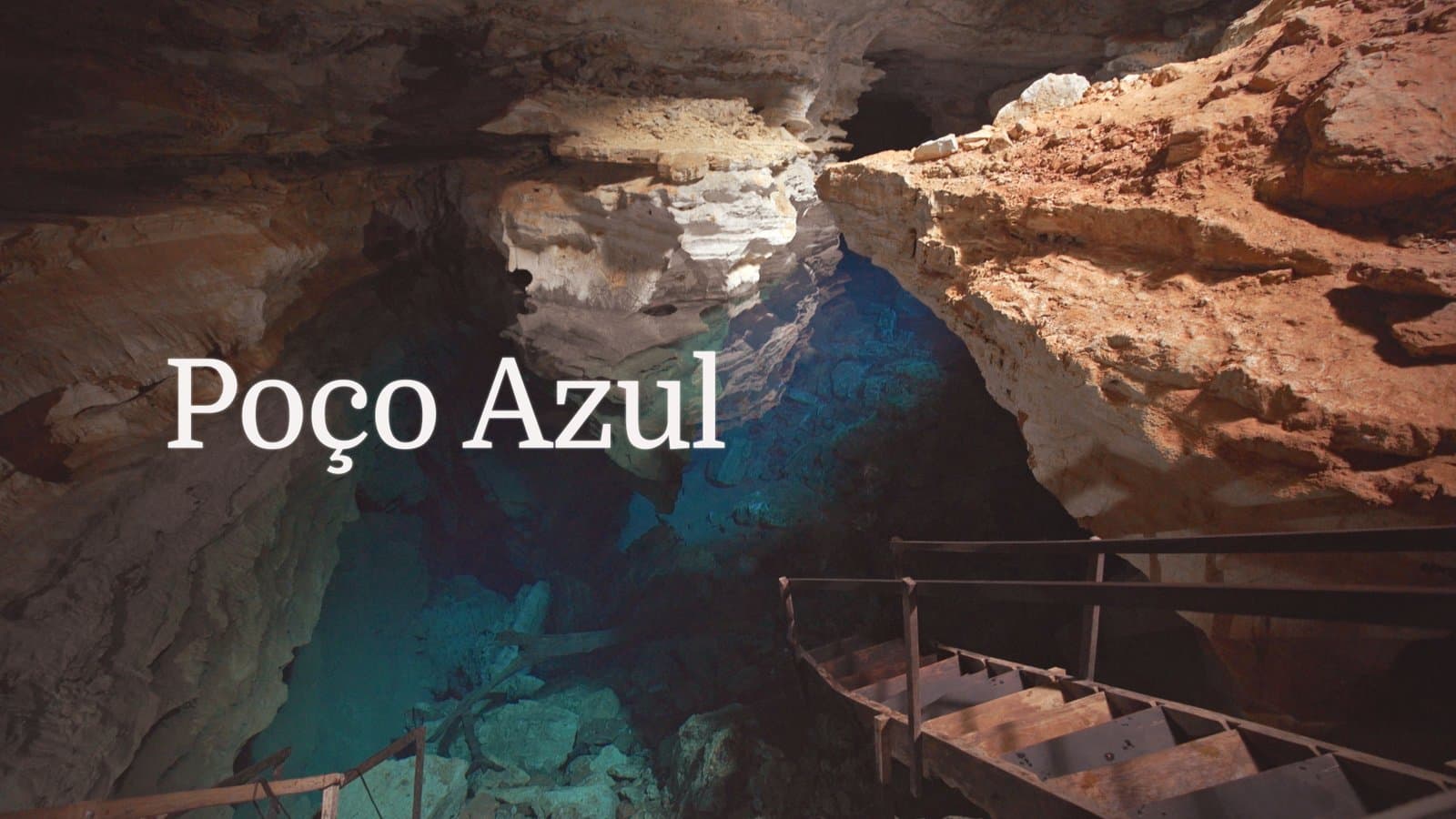
If you're planning a trip to Chapada Diamantina, Poço Azul is an attraction that is really worth visiting. Imagine walking into a cave discovered in 1995, a setting so surreal it looks like a hand-painted picture. The turquoise-blue shade of the water contrasting with the limestone rocks, which glow under the sunlight.
In this article, I'll share my personal experience in this magical place, plus a complete guide with all the practical information you need to visit. Get ready!
Watch the full content
Info
- Where: Nova Redenção, in Chapada Diamantina, Bahia.
- From Andaraí: about 60 km, a bit of asphalt and a good stretch of dirt road.
- Ticket: R$ 70 per person, float included. Kids up to 5 get in free.
- Parking: free, right in front of the park.
- Facilities: restrooms, snack bar, restaurant and a convenience store.
- Rules: shower before going in, life jacket and snorkel mandatory, no sunscreen and no jumping into the water.
- Depth: from 4 to 21 meters.
- Best time: April to September, on clear days, between noon and 2pm.
- What I spent: R$ 105 in total, with the ticket and lunch.
Where it is
How to get to Poço Azul
Poço Azul is located in the town of Nova Redenção, in Chapada Diamantina, Bahia. It's a cave with crystal-clear, transparent water, and one of the main tourist attractions in the region.
Poço Azul can be reached by road by car, and 4×4 vehicles are recommended, especially in the rainy season. Many visitors choose to hire local tour agencies that offer transportation and guides.
Andaraí, our base
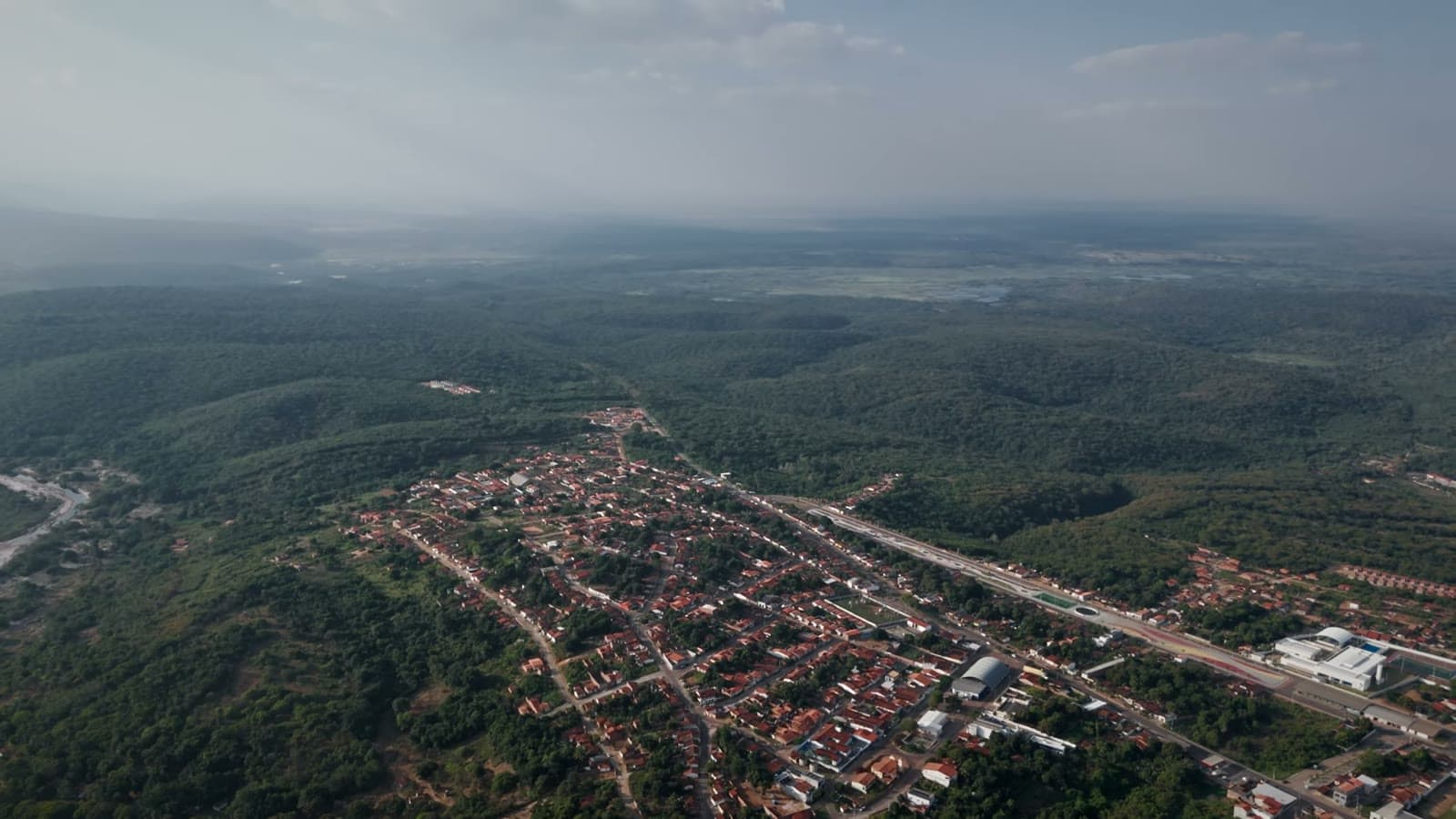
421 km from Salvador, our first stop in Chapada Diamantina was Andaraí, a region first inhabited by the Cariri Indigenous people, until diamond deposits were discovered in the colonial period. The village of Andaraí grew up around the best-known, highest-quality diamond mine in the region.
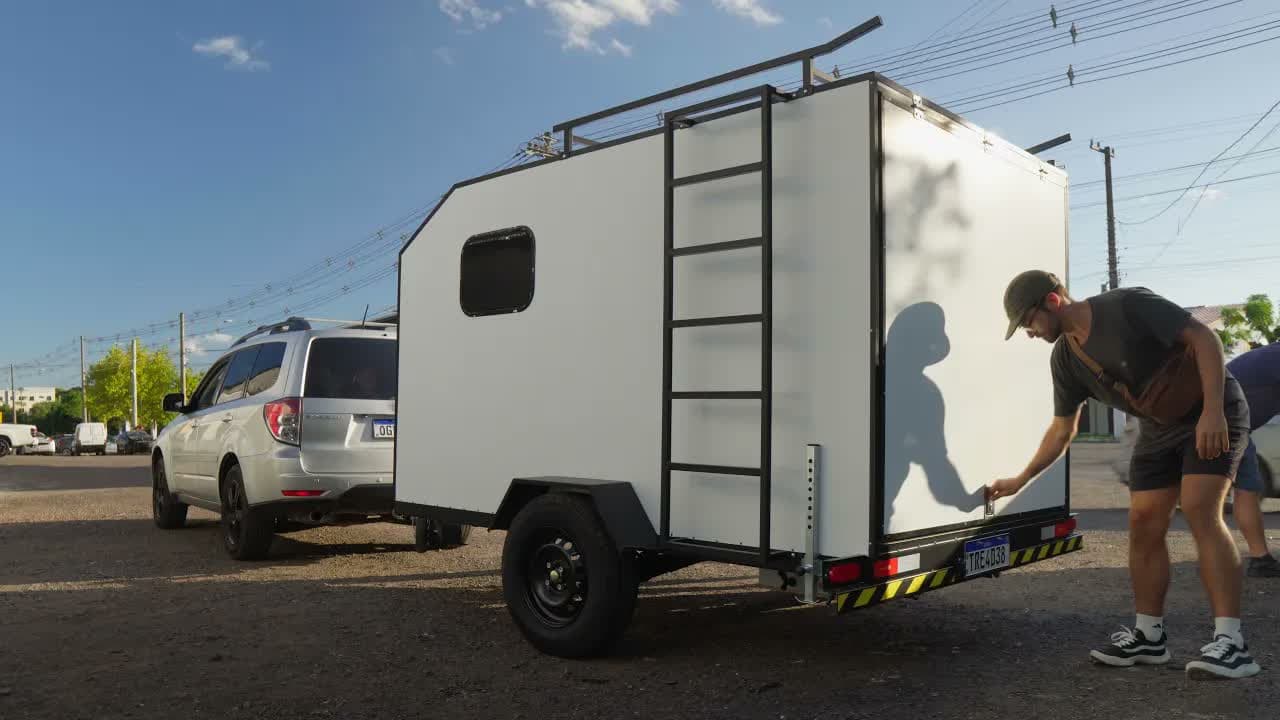
Back then, Nina and I were traveling with Cris and Renata, fellow travelers, and we spent two weeks camped on a beautiful piece of land. The three of us went in my car, since the rooftop tent on the other car was open. Nina, sadly, stayed behind looking after our stuff at the camp, because Poço Azul is no place for a dog.
The road
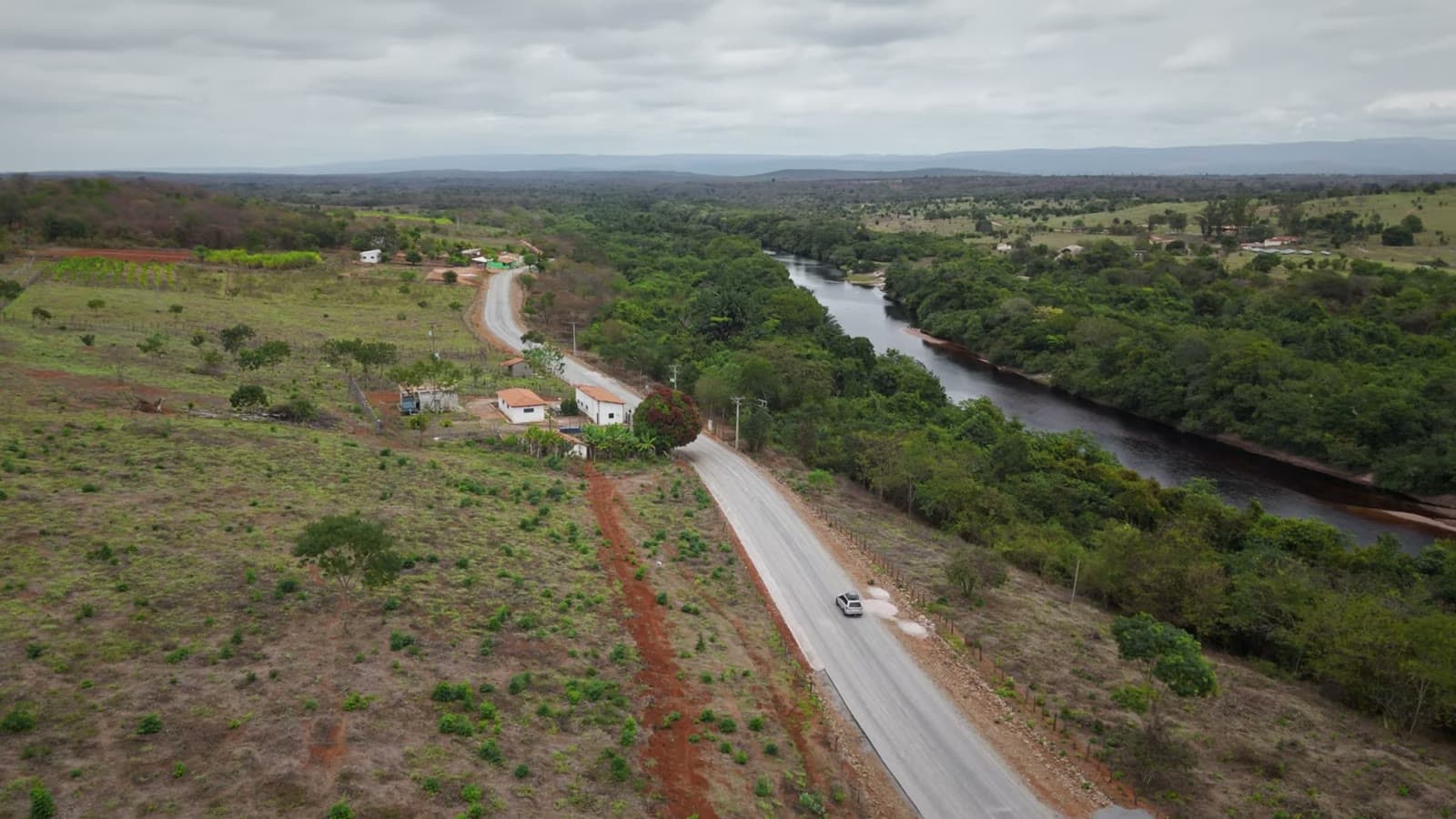
Leaving from Andaraí, it was about 60 km, some 50 minutes between asphalt and dirt road, to the entrance of the Poço Azul Park. We went in October, when Chapada Diamantina goes through its dry season, before the end-of-year rains, and the scenery and landscape were straight out of a movie. We stopped for a minute to put the drone up and get some shots arriving at Poço Azul.
The arrival
There's free parking right in front of the park. We parked the car, made a sandwich right there and paid R$ 70,00 at the gate to get into the park. That price already includes the 15-minute float in the crystal-clear waters of Poço Azul.
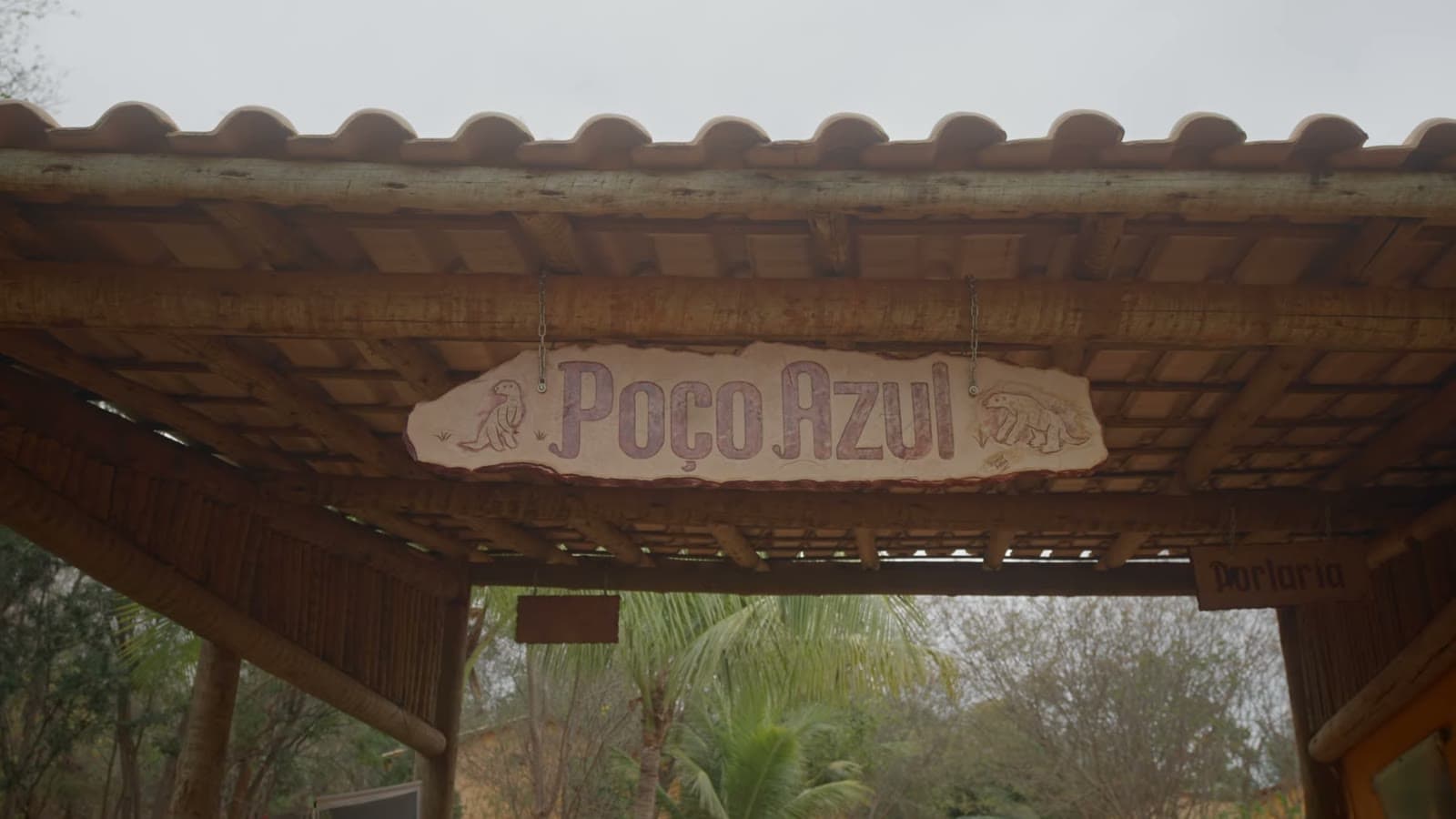
It's a maintenance and conservation fee, and kids up to 5 get in free. The facilities are super organized, with restrooms, a snack bar, a restaurant and a convenience store. I thought it was a fair price, and you'll soon see why.
The preparation
Going up the entrance stairs, we were directed to take a shower to rinse impurities off our bodies, and it's worth remembering that no kind of sunscreen is allowed, to preserve the waters of Poço Azul. And the shower water is cold!
With your body clean, each person gets a life jacket and a snorkel for the float. Past the entrance, it's a 5-minute walk along a trail in absolute silence until you reach the mouth of the cave.
The descent to Poço Azul
In single file, we started going down a huge wooden staircase built in 1997, shortly after the cave was discovered, with an 80-meter descent. A very unique experience. Step by step, until you start seeing the crystal-clear water down below. You need to be careful not to hit your head on the rocks, especially taller people.
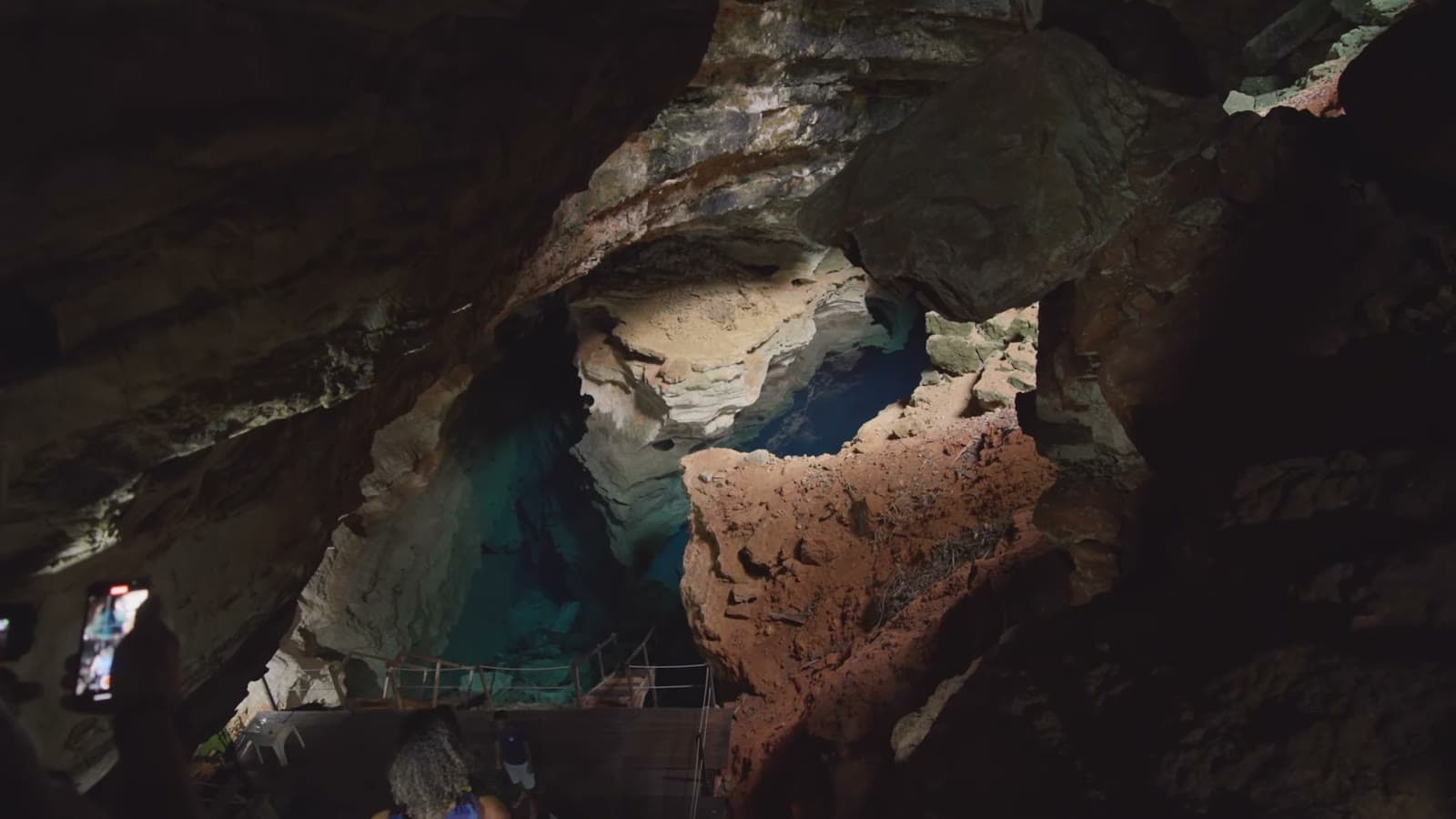
Once at the access platform, the guides explain all the curious facts about Poço Azul, and also give the instructions you need to float safely while respecting the environment.
A fossil deposit
Our guide told us that an expedition of geologists, paleontologists and professional divers found more than 3,000 bones of prehistoric animals down there, like the giant sloth, the saber-toothed tiger, the mastodon and the giant armadillo. Poço Azul is a true fossil deposit of the megafauna that lived in South America during the Pleistocene.
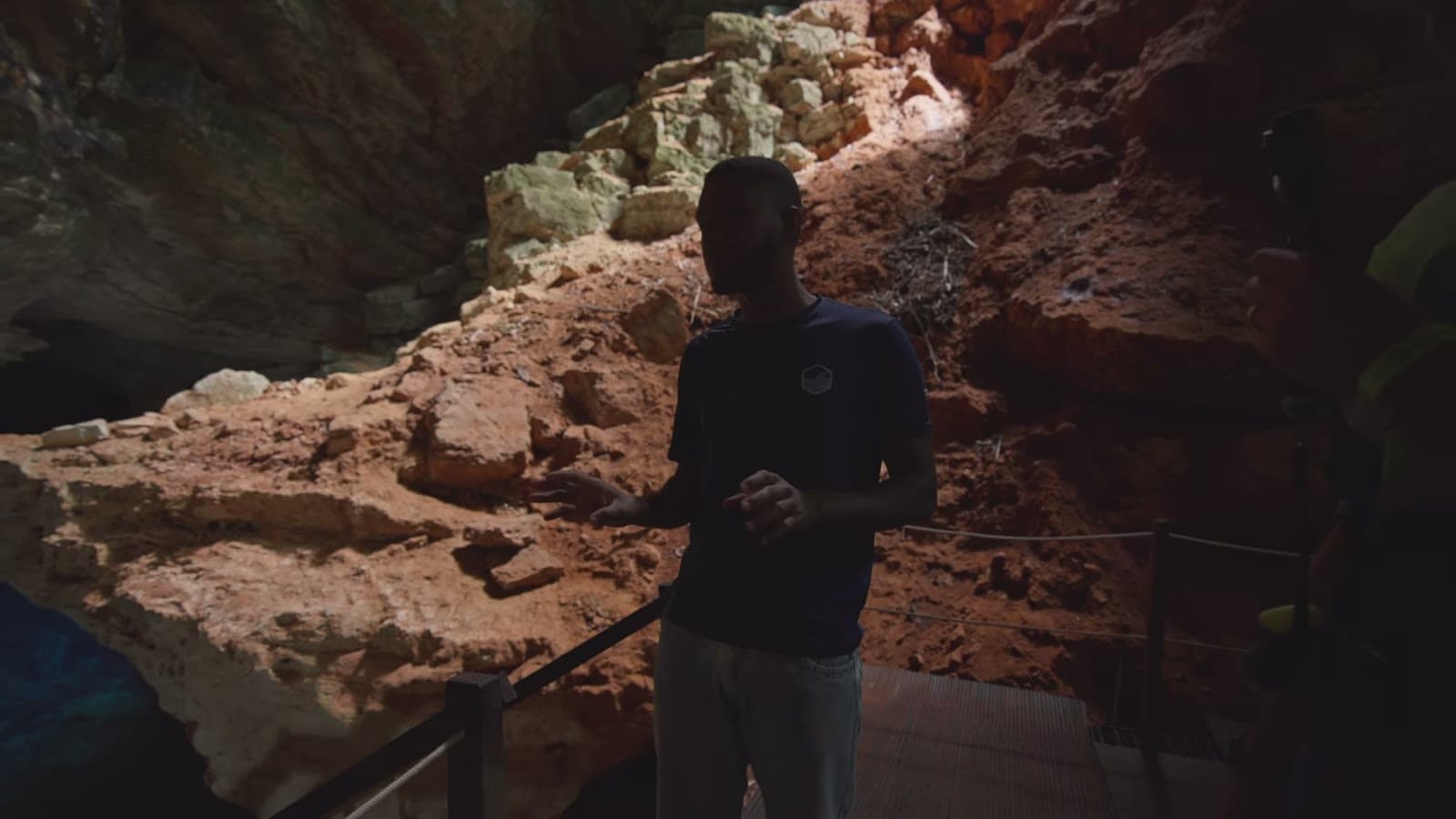
That expedition became a documentary, Brasil da Pré-História: Mistérios do Poço Azul, which you can find on YouTube if you're interested.
The float rules
The life jacket is mandatory and can't be taken off in the water. Jumping in isn't allowed, which is why there's an access ladder, and you have to move very gently in there, no sudden movements, staying within the marked limits. These precautions matter so you don't speed up the erosion of the cave, which is made of limestone and sedimentary rock, more sensitive types of rock.
The Magical Moment
The float is without a doubt the coolest part. To get into the water, the life jacket and snorkel are mandatory, and you're not allowed to jump straight into the water. You have to use the stairs and enter the water gently, without splashing water everywhere.
Then it was time to put the camera down and get in the water. Cris brought the GoPro, and that's how we managed to get the shots in there.
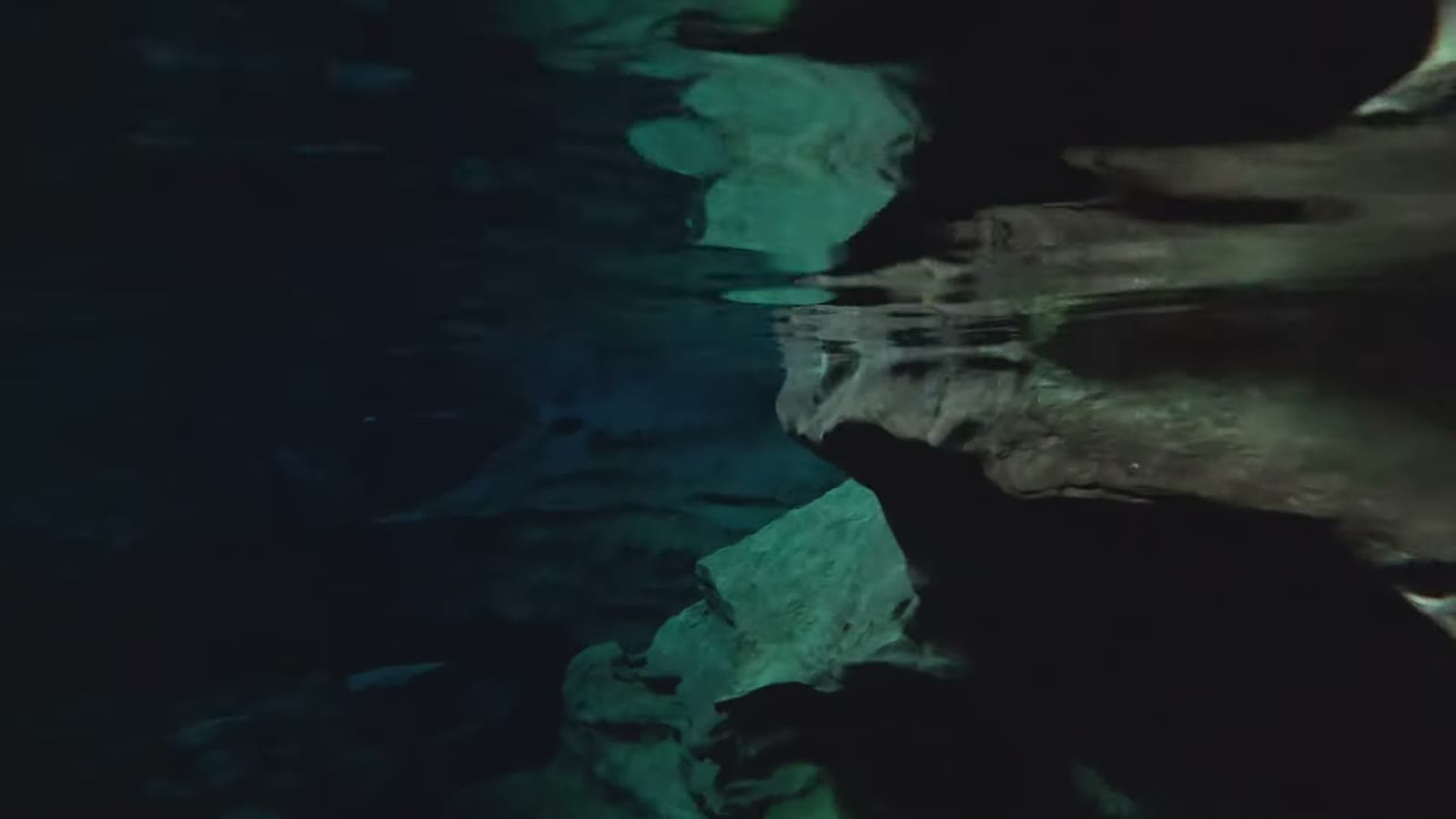
The feeling of starting to float inside a cave is simply an experience I'll carry with me for the rest of my life. It's a totally unique experience, and even though it's short (only 15 minutes), we were completely dazzled by the float.
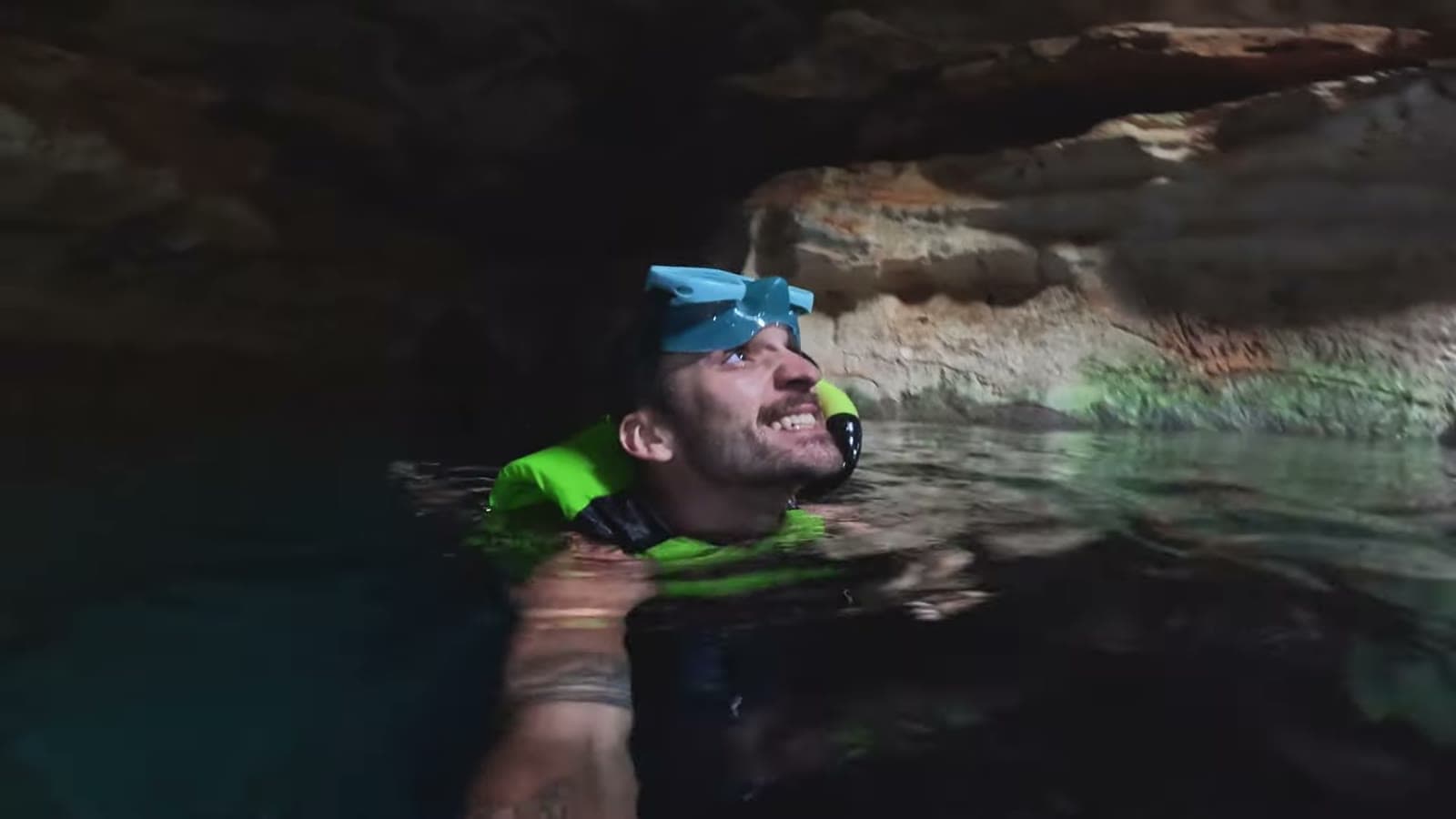
In the end, it was almost 20 minutes enjoying the clear waters of Poço Azul. The day we went was cloudy, so we didn't actually get to see the sun coming into the cave. But it was still totally worth it. On the way back up the stairs, we even saw a vulture fight. Unreal.
The best time to visit Poço Azul
The best time to visit Poço Azul is between April and September (the dry season), when the water is at its clearest and the turquoise blue reveals itself in all its splendor, especially between noon and 2pm, when the sun shines directly into the pool, creating that magical light effect that lights up the rocky bottom. Avoid the rainy season (December to March), which can make the water murky, and go on weekdays to escape the crowds, guaranteeing a calmer experience and incredible photos of this setting that seems to come straight out of a dream.
Why Is the Water So Blue?
The water of Poço Azul is so crystal-clear because of a combination of geological and optical factors: it comes from underground springs that naturally filter out impurities through the limestone rocks, resulting in an almost distilled liquid.
The absence of suspended sediment lets sunlight penetrate without scattering, while the white limestone bottom reflects the blue tones of the visible spectrum (a phenomenon called Rayleigh scattering), enhancing the turquoise. The mineral composition of the water (rich in dissolved calcium carbonate) also acts as a natural “clarifier”, creating this hypnotic transparency effect that seems to amplify every underwater detail.
The turquoise shade comes from the magnesium and calcium carbonate in the rocks, the natural way the light hits the water, and the depth, which goes from 4 to 21 meters.
Lunch at Dona Alice's
Inside the park there's a snack bar with pastel and juices, plus Dona Alice's Restaurant, which serves delicious home-style food cooked in clay pots, priced by the kilo, super fair. And I also grabbed a little ice cream and a cocadinha.
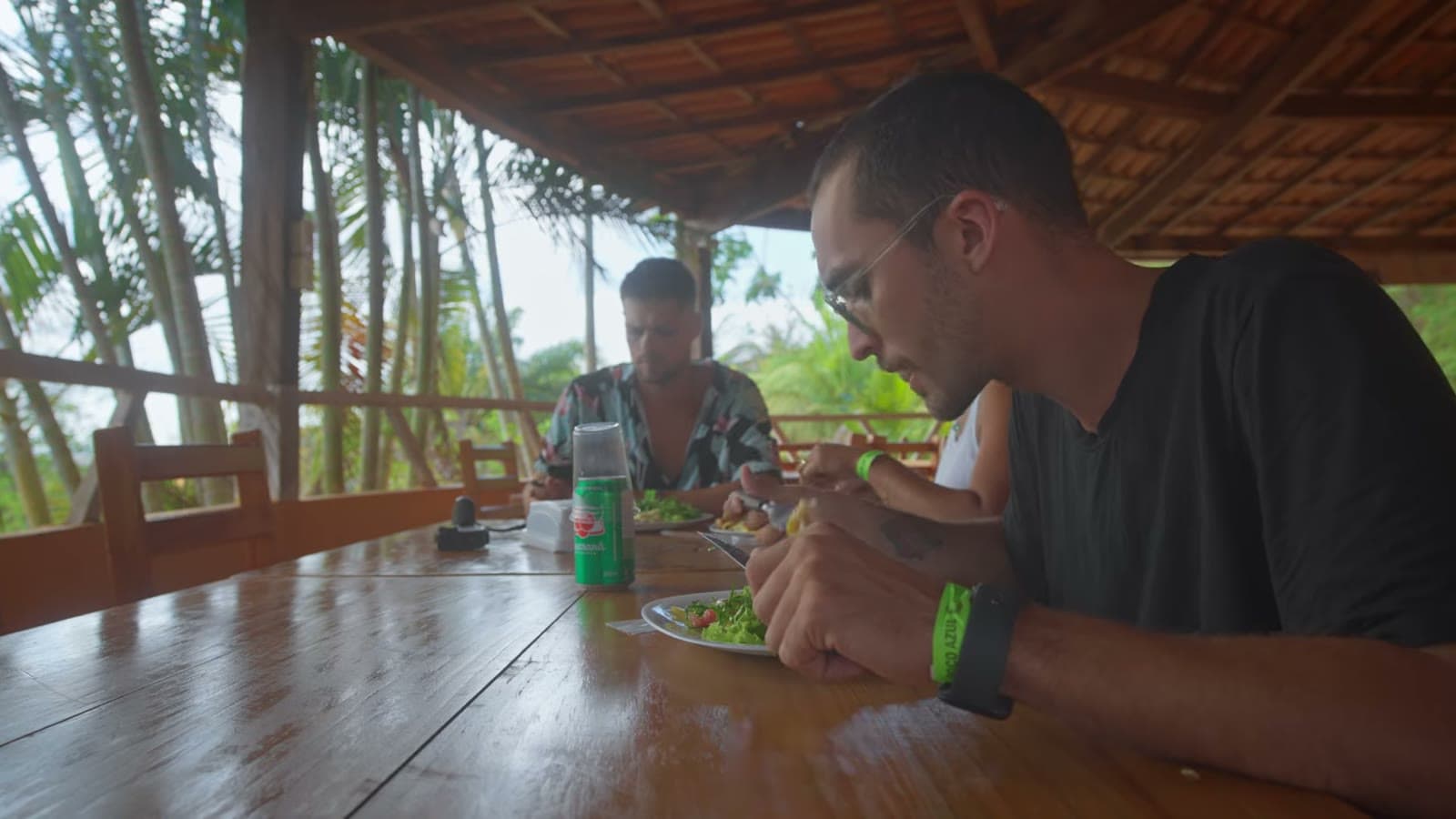
I spent R$ 35 on food, with a drink, dessert and everything. Very fair. Add the ticket and it came to R$ 105 in total.
I didn't really have any expectations, but Poço Azul surprised me every second. The place is very well organized, the food is really good, the welcome is really good. The ticket is a bit pricey, but it's totally worth it.
Olho d'Água da Urânia
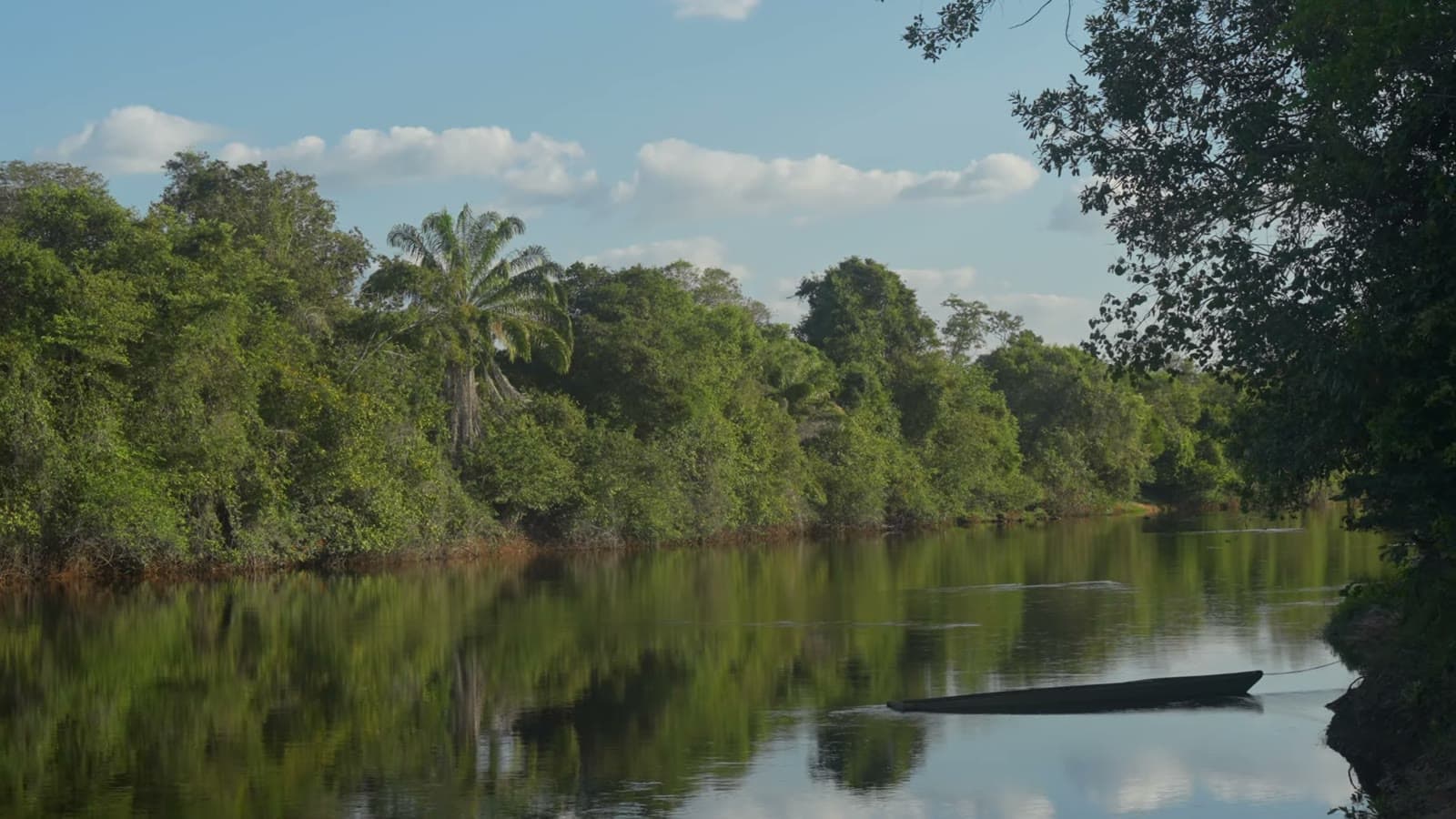
To avoid that post-lunch slump, we got back in the car and headed to Olho d'Água da Urânia, a river that runs close to Poço Azul and that few people know about. It was 3:15pm, with plenty of sunlight left.
It was 3 km to get there. We parked the car and just took in the gorgeous nature of the place, especially when the sun came back out: the beautiful green of the trees and the red reflection in the river water. It was so beautiful I had to put the drone up again.
Conclusion: Is It Worth Visiting?
Absolutely YES! Poço Azul is one of those places that seem to come out of a fairy tale. If you love nature, adventure and surreal landscapes, it's without a doubt really worth it.
If you enjoyed this, check out the Itacaré and Arraial d'Ajuda videos on the channel too. See you in the next one!
Tags
- # bahia
- # chapada diamantina
- # cave
- # poço azul
- # travel