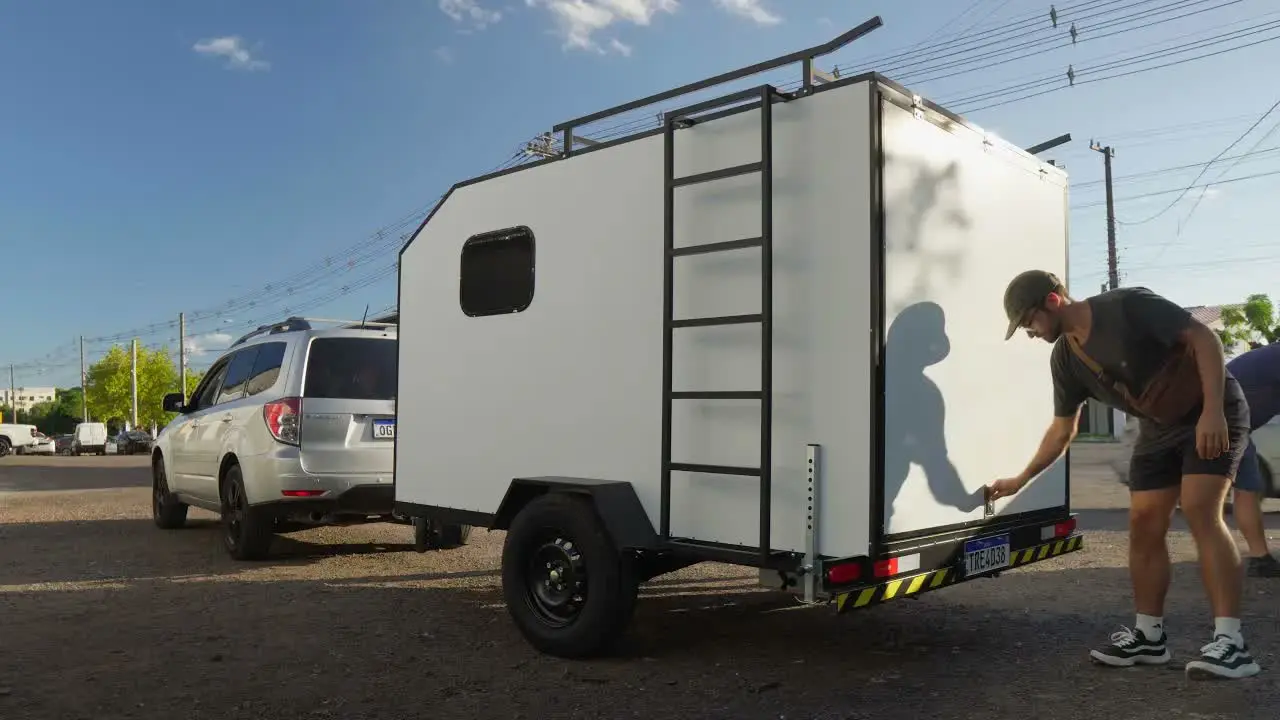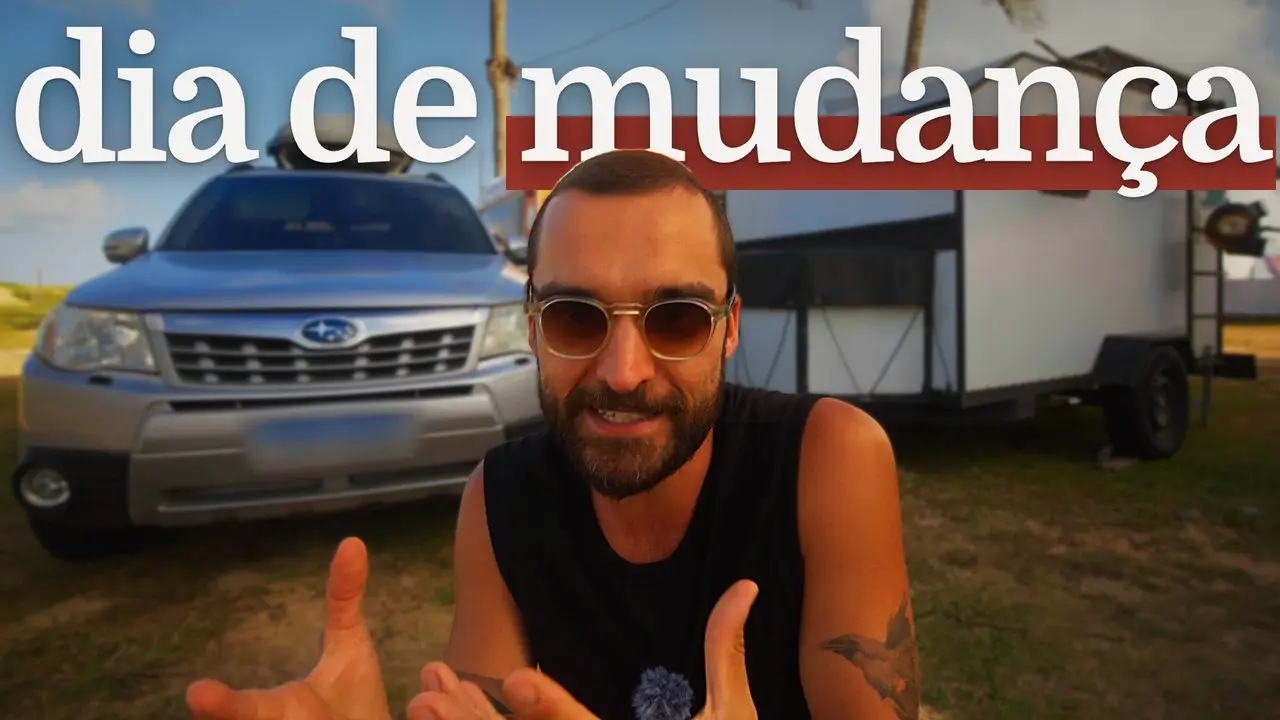
What it is really like to move campsites with a mini trailer: packing up camp in Aracaju, hitching up, hitting the road and setting everything up again on a small farm in Pirambu, Sergipe.
I've wanted to show this for a long time: what it's really like to move from one campsite to another with our mini trailer. Packing up camp, hitching the trailer to the car, hitting the road and arriving somewhere new to set everything up again.
This time we left Camping Praia Grande, in Aracaju, after six days camped there, and headed to a small farm in Pirambu, also in Sergipe. A short move, an hour and a half on the road, but with everything a move with a trailer involves: the day before, the early alarm, the hitching and an arrival that turned into a real struggle.
Watch the full content
About the move
- From: Camping Praia Grande, Aracaju, Sergipe.
- To: Chácara Refúgio de Assis, in Pirambu, Sergipe.
- Road: an hour and a half.
- Campsite: R$ 25 a night, for everything.
- When: we packed up on Tuesday, October 6, and left on Wednesday, the 7th.
- Wake-up time: 5:29 a.m.
Camping Praia Grande
Camping Praia Grande, run by Carlinhos, is very simple: a small beachfront campsite on the avenue that runs right along the sea. The facilities are a big open kiosk with a sofa and tables, two sinks for washing dishes, a women's restroom, a men's restroom and one more big bathroom where you can shower, plus an outdoor shower. I took most of my showers out there, in the open air. There are also a few kiosks scattered around the grounds that, to be honest, are pretty abandoned. The idea is good, the intention is good, but they need some care.
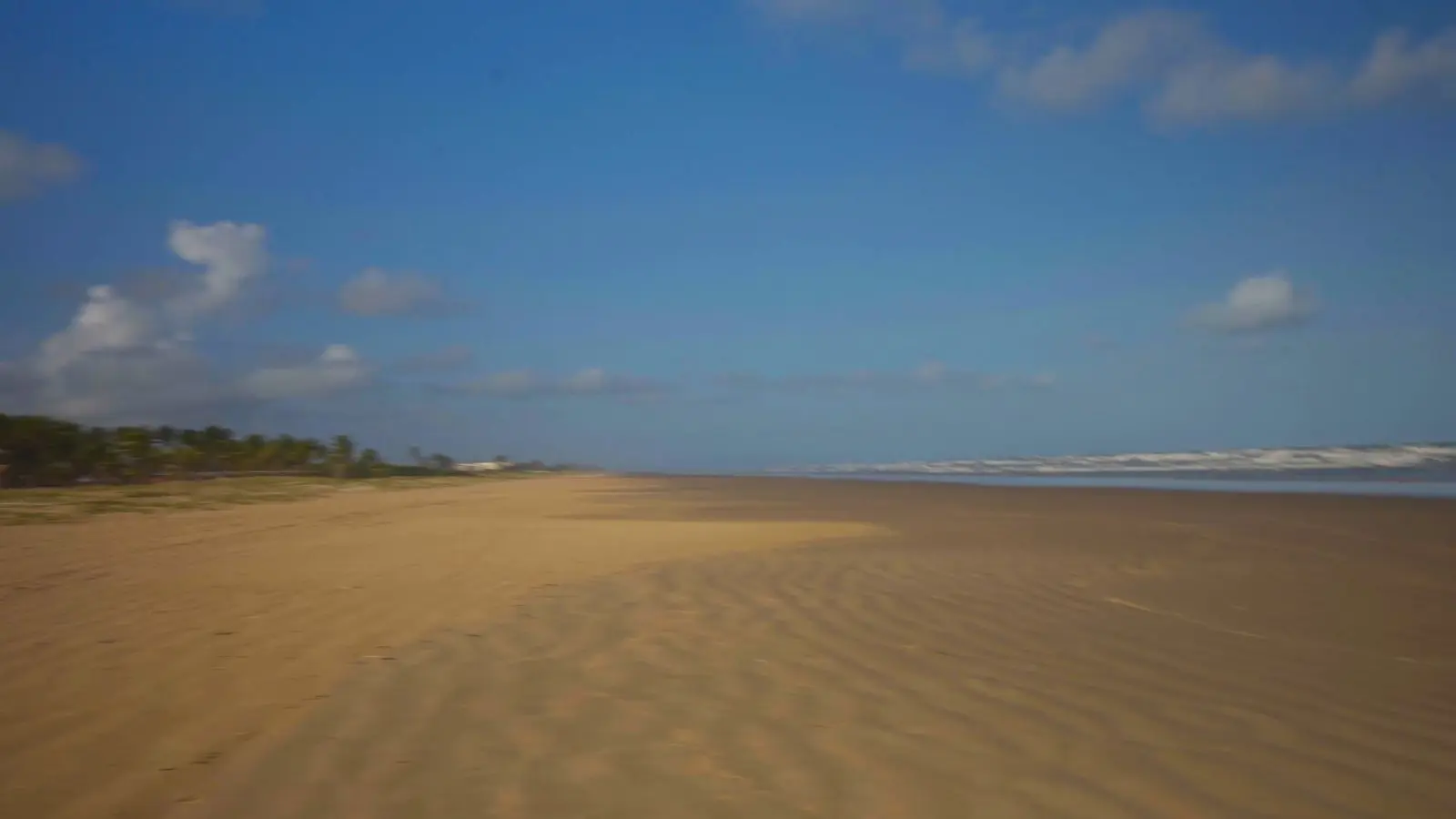
The beach is right in front of the campsite: a huge stretch of sand and a very calm sea. At low tide I walked forever just to reach the water.
About prices: we were paying R$ 25 a night, and not per person. It covered everything: me, Lelê, Nina, the trailer and the car. Of course the facilities are simple, and there's no hot water. But we're in the Northeast, where it's brutally hot, so you just plan ahead and shower around five thirty in the afternoon, before it gets dark.
How our camp is set up
We parked the car on the side the wind comes from, which is all from the beach, to block it a bit. The trailer's door faced the neighboring trailer, which was parked there with nobody in it, so we'd be more sheltered from the wind and the sun.
Whenever we stop at a campsite, I've been resting the trailer on something: a few bricks, a piece of wood. I find the front jockey wheel a bit weak. We carry the wood with us; the bricks I found right there, at a construction site. On the roof of the trailer we have the Starlink, pointed in the right direction and plugged into the trailer, a skylight and the solar panel.
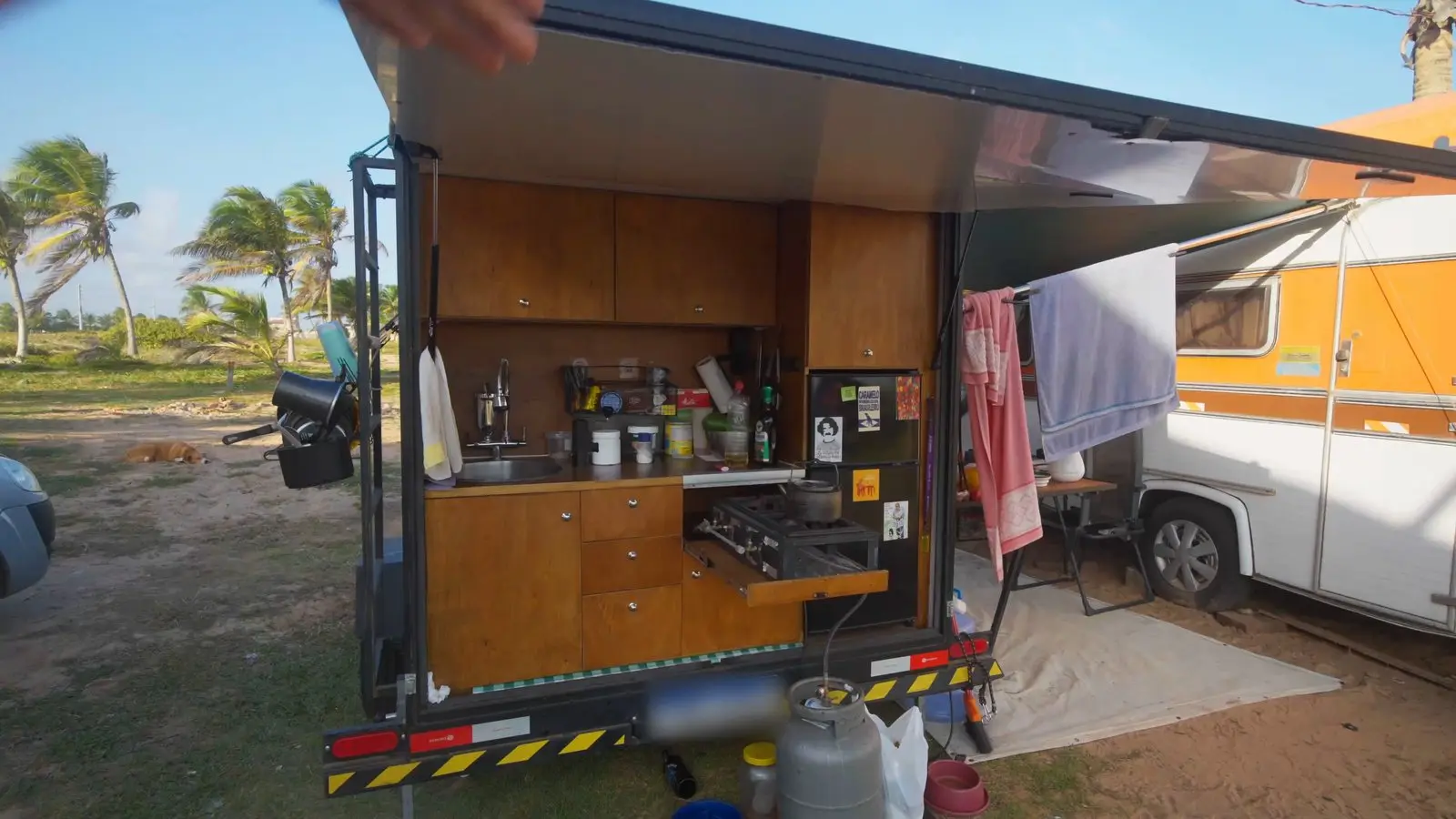
The kitchen is entirely outdoors, and we really love that. There's a two-burner industrial stove, the gas cylinder, a fridge with a freezer and the sink, which draws water from a 100-liter tank under the trailer. The kitchen lid opens up and, when we close it, you can't see a thing. Underneath everything there's a permeable mat: if it rains, the water drains through and doesn't turn into a puddle. And there's the folding table, which we use for literally everything: breakfast, work, lunch, dinner.
Seu Alberto's hack
At first, the stove's second burner started scorching the wood of the kitchen. The one who saved us was seu Alberto, from Camping Vila Nômade, in Arembepe, near Salvador, Bahia: he helped us fit an aluminum bar, which solved the problem, and a paint can around the stove, which blocks the wind from every side. Now we use both burners with no trouble. Our master hack. And if there's no improvised fix of some kind, it isn't really camping, right?
Why we leave so early
We work during the week, so long drives, four, five, seven hours, are saved for Saturday or Sunday. When the drive is short, like this one of an hour and a half, we travel on a weekday, with a routine: we pack almost everything the day before, before dark, and leave very early the next morning.
We always like to leave places early, and it makes a big difference. You get to the new spot, set everything up and, before you know it, it's not even nine in the morning yet. That was the plan: leave around six, arrive early and still get a normal Wednesday of work done.
Packing up the day before
On Tuesday, after work, around four thirty, we started the pre-packing. For the gas cylinder you just close the valve, disconnect the high-pressure hose and take it to the storage box at the front of the trailer. The stove slides back in, and every drawer gets its little locking button, so nothing rattles on the road. The Starlink stays on until morning.
A white pipe runs under the trailer and carries the sink water to the ground, the gray water. You just unscrew it. All in all, this packing takes about forty minutes to an hour. This time it took a little longer because I was filming, but by sunset we were done. The next day it was just a matter of grabbing the last odds and ends.
5:29 in the morning
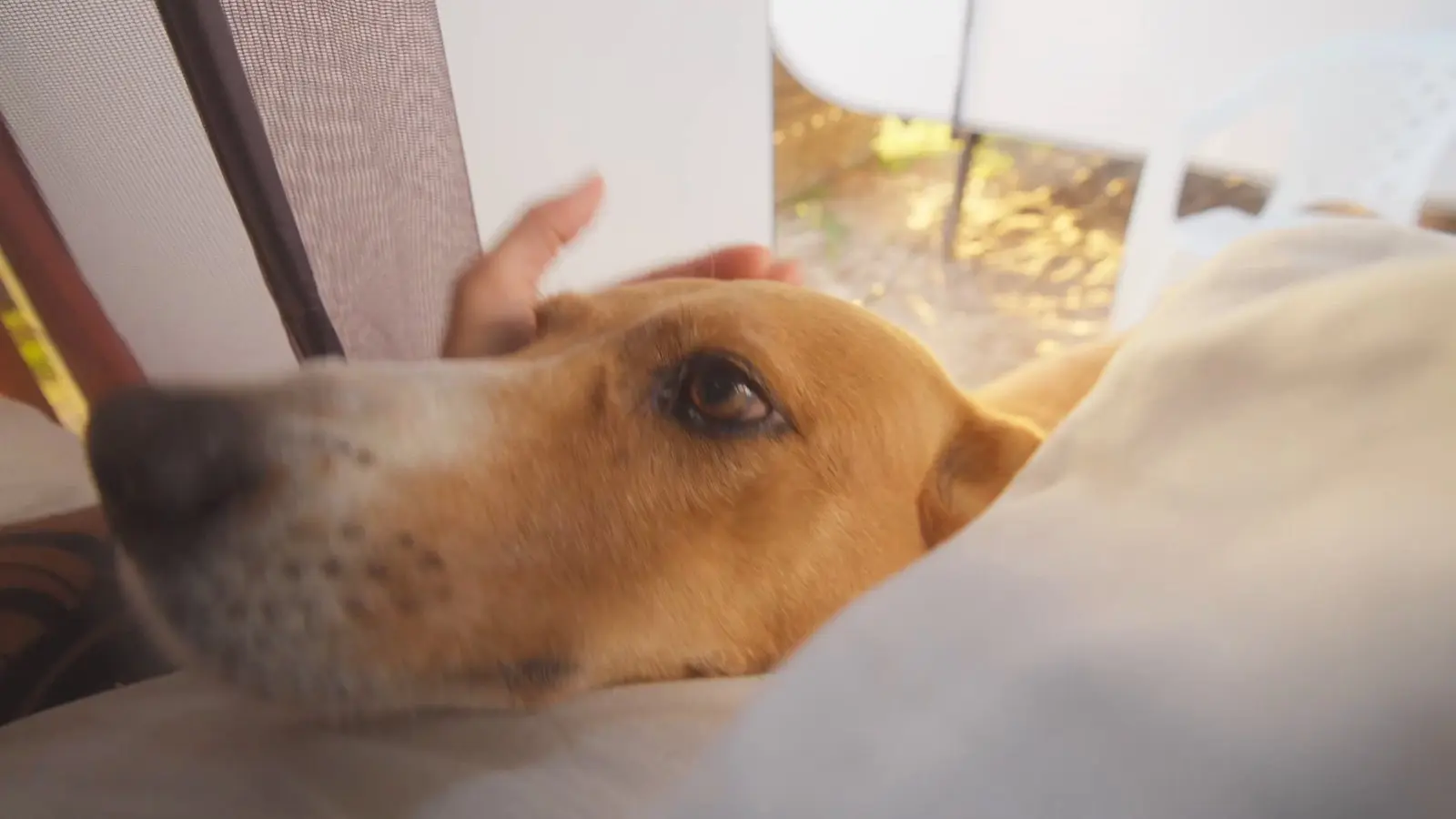
We woke up at 5:29, with the sun rising and Nina doing her usual morning whine. Inside the trailer, before leaving, we take things down from up high, like the guitar, which goes on the bed, and we secure both cabinets with an elastic band and a screw so nothing falls out. The rest of the mess stays: we organize everything once we get to the new place.
We also always make a snack for the road, so we don't depend only on gas stations. This time Lelê made some sandwiches while I finished the electrical part.
From campsite power to the battery
The front storage box holds the heart of the electrical system: the battery, the inverter, which is a Must, and the breakers. At this campsite each spot had its own electricity meter. So I take a photo of the meter when I arrive and another when I leave, to know how much we used.
The switch is always the same: I unplug the trailer from the campsite outlet, turn on the inverter's main breaker and press its little button, which beeps. From then on, the kitchen fridge runs on the battery, which was at 100%, charged by the solar panel. The whole system is 220 V: one battery, a hybrid inverter and the breaker boxes that carry power into the trailer.
Locks, awning and stabilizer legs
The kitchen lid has two locks, one on each side, which we added on top of the original latch, and it gets a padlock. So does the trailer door. Then comes the awning, which is tied down with two ropes because of the wind: you just lower it, it rolls up on its own, and you close it with the Velcro.
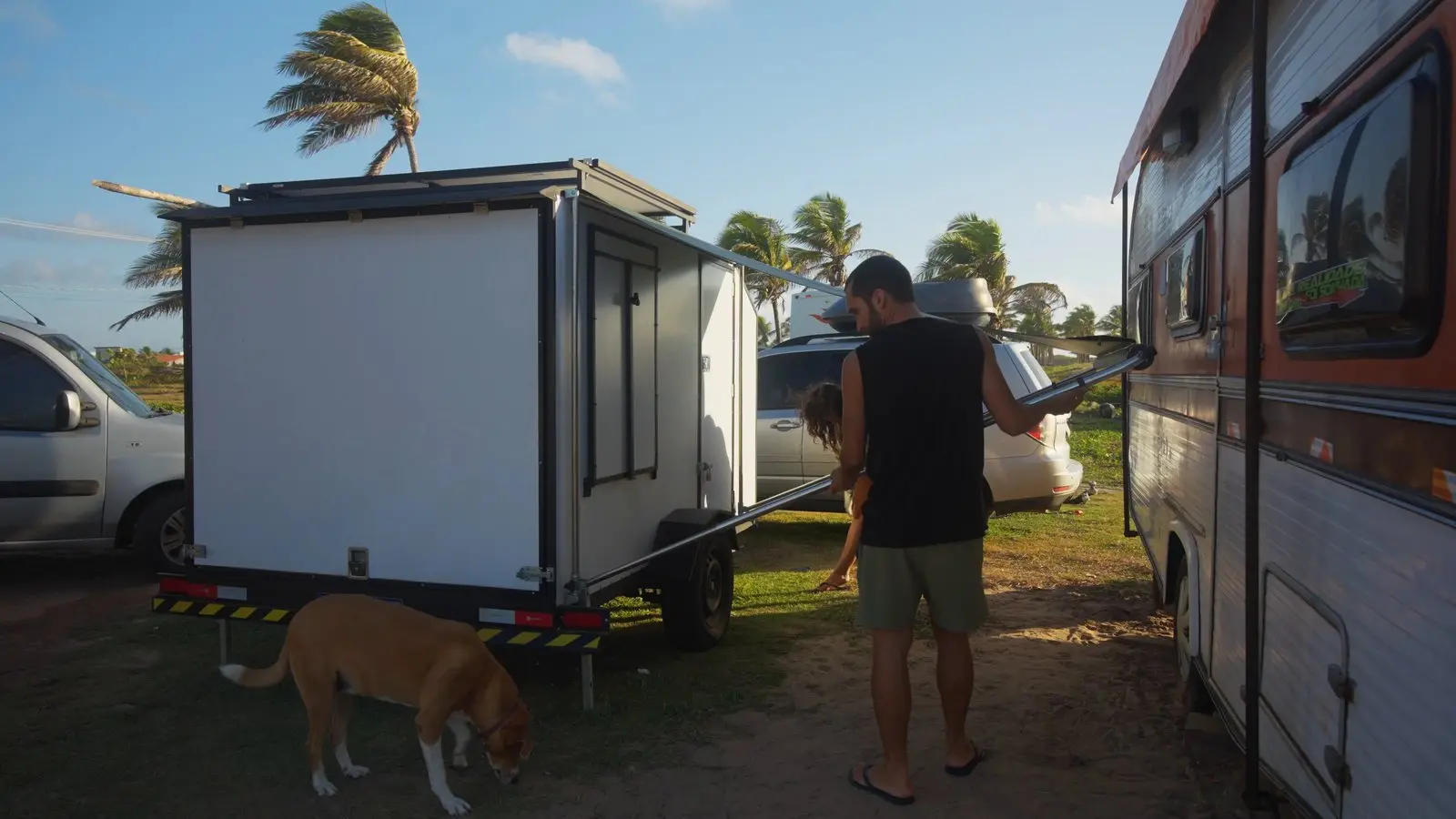
Last, we raise the two stabilizer legs. One of them is a bit bent: it hit something underneath on a speed bump somewhere along the road, so raising it is a little annoying.
Hitching, the most annoying part
First I position the car carefully, backing up slowly, with Lelê guiding me. Then comes the part that takes some muscle. Before coupling, I put a little bit of steel wool in the hitch, which helps with the contact. That was a tip from the guy who built the trailer.
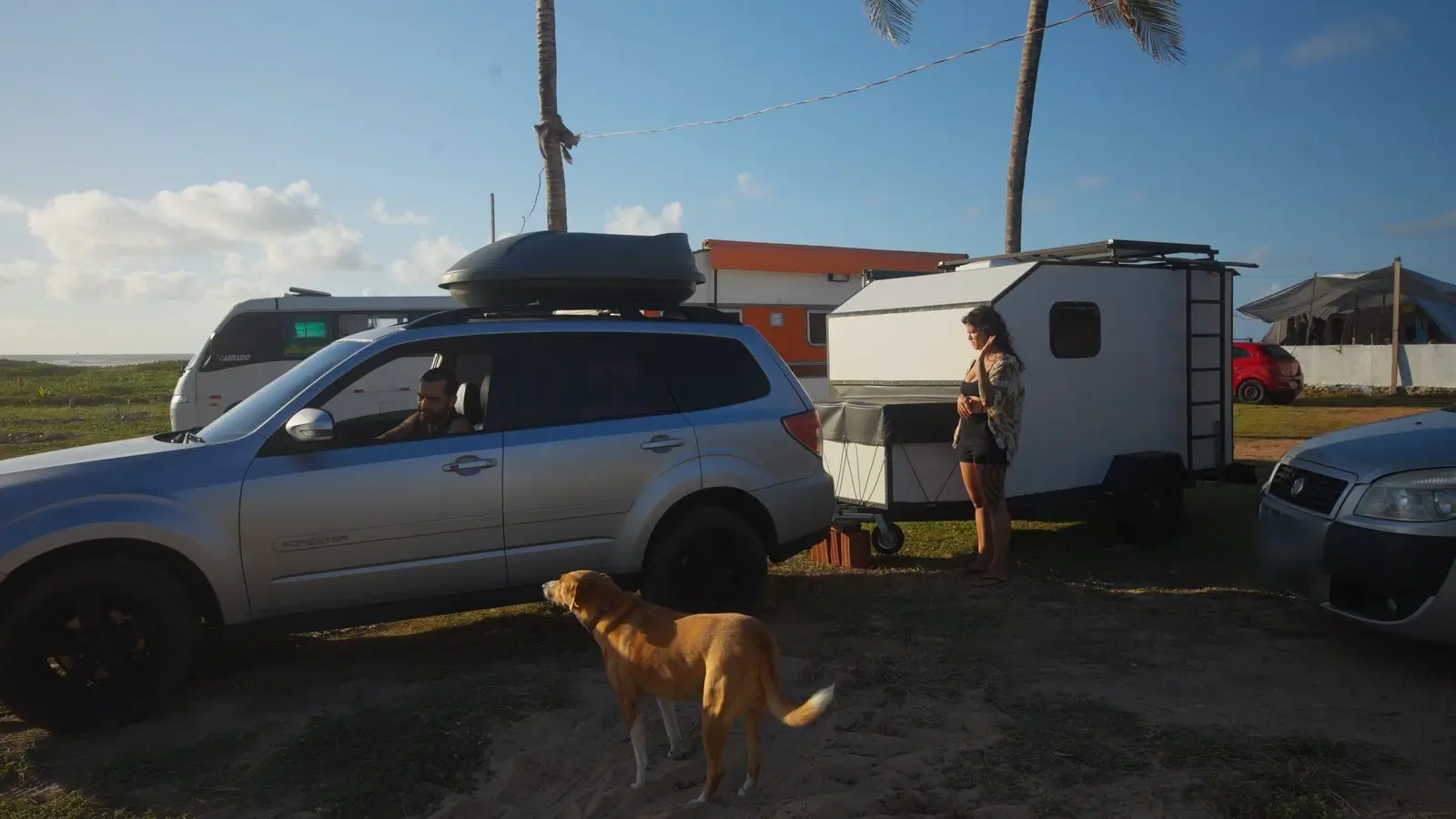
Once it's hitched, in go the electrical plug and the safety chain with a padlock (which, to be honest, is more for an emergency), and finally we pull the bricks out from under the wheel. Nina boards last, with her leash looking very smart.
On the road
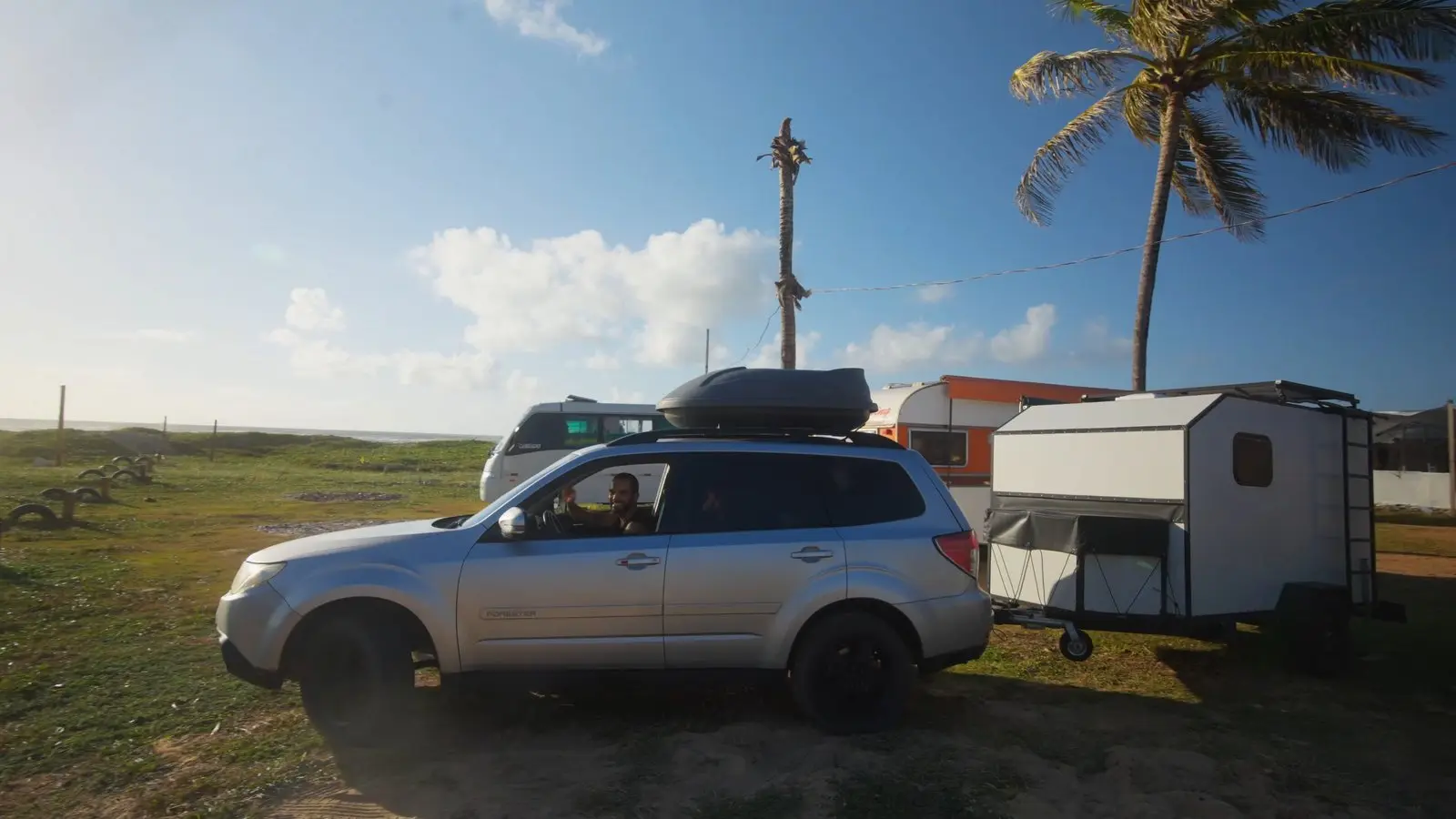
We left Aracaju with our snack and drove an hour and a half to Lagoa Redonda, in Pirambu. The hard part comes later.
The arrival, the hardest part
The arrival is always the tensest moment, because we have to park the mini trailer and never know exactly what we'll find: a pothole, a drop, a garage gate, something that might hit the top of the trailer.
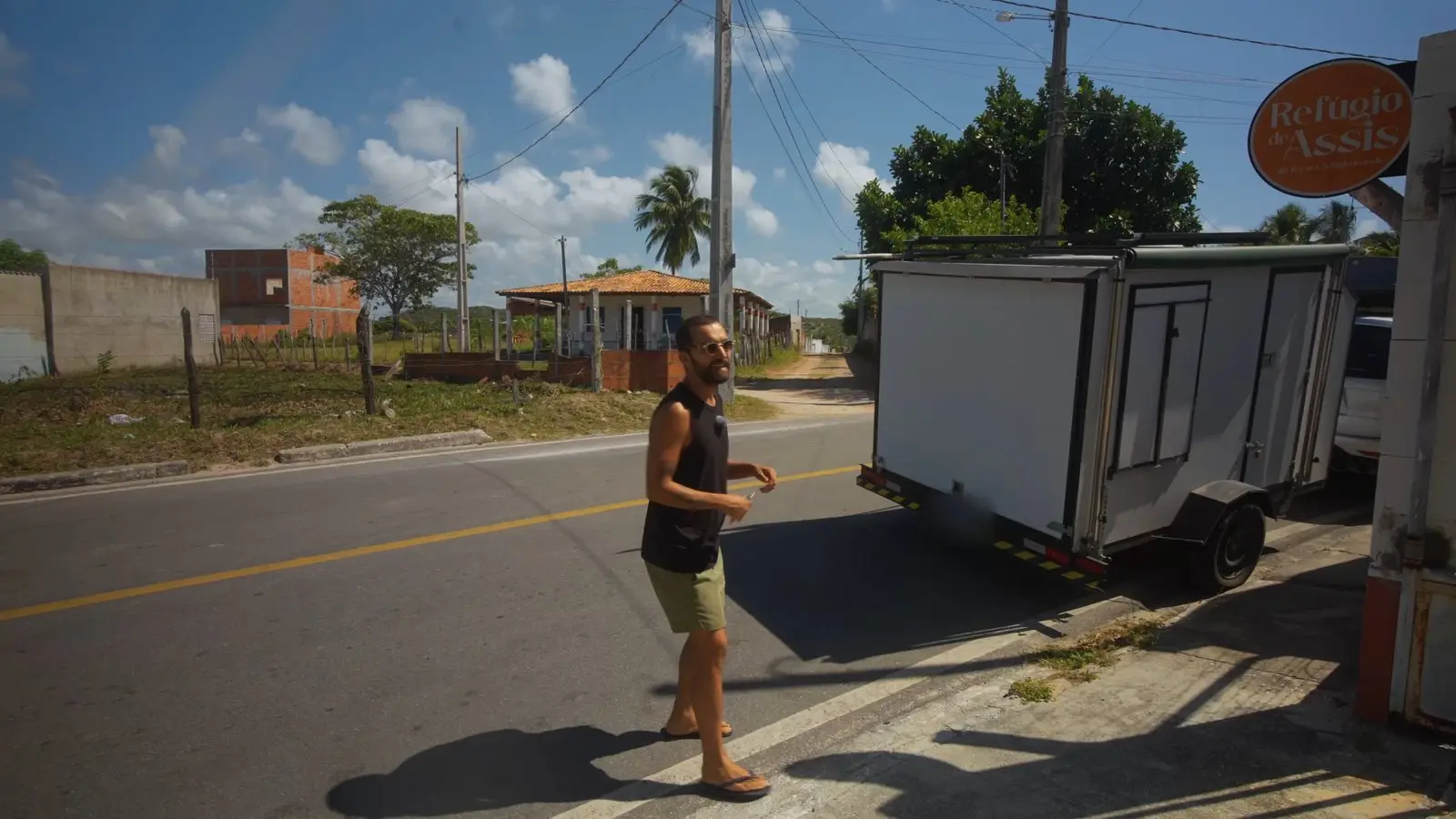
We opened the gate and the challenge began. On the very first maneuver I scraped the wheel on the curb and turned the wrong way. We couldn't film the tensest part: the trailer's water tank was scraping the ground, on one side and the other, and we had to use two planks of wood to get it in. That's what I always say: the hardest part is getting the trailer into place.
Setting everything up again
This time we parked the trailer in the sun on purpose, because there we'd be relying on solar power. The panel gets the sun from midday on, and the kitchen opens toward the shade, where we can work and cook comfortably.
To unhitch, I wedged a piece of wood against the wheel so the trailer wouldn't roll forward or back, and rested the front wheel on a few stones and a small piece of wood. The stabilizer legs have little adjustment balls that make everything kind of stiff. I really wish they were the adjustable kind.
Then it's opening the kitchen slowly, to check that nothing tipped over (nothing serious), extending the awning and laying down the mat. Since it was grass, we only used the rubber one. The Starlink goes into place, taking care that the door doesn't pinch the cable. By the time I set up the table, it was already past nine: Lelê had to work, and so did I.
I've had this little table for a long time. It traveled three years with me by car, on the first trip, still without the trailer. It's pretty beat up by now, but it still does what it needs to do.
Last, the water. The 100-liter tank fills through a hose with a quick connector; when it's full, the overflow starts dripping and you just turn it off. At the sink outlet I attach a hose that carries the water farther away, otherwise it falls right under the trailer and makes a puddle.
How fast the Starlink is
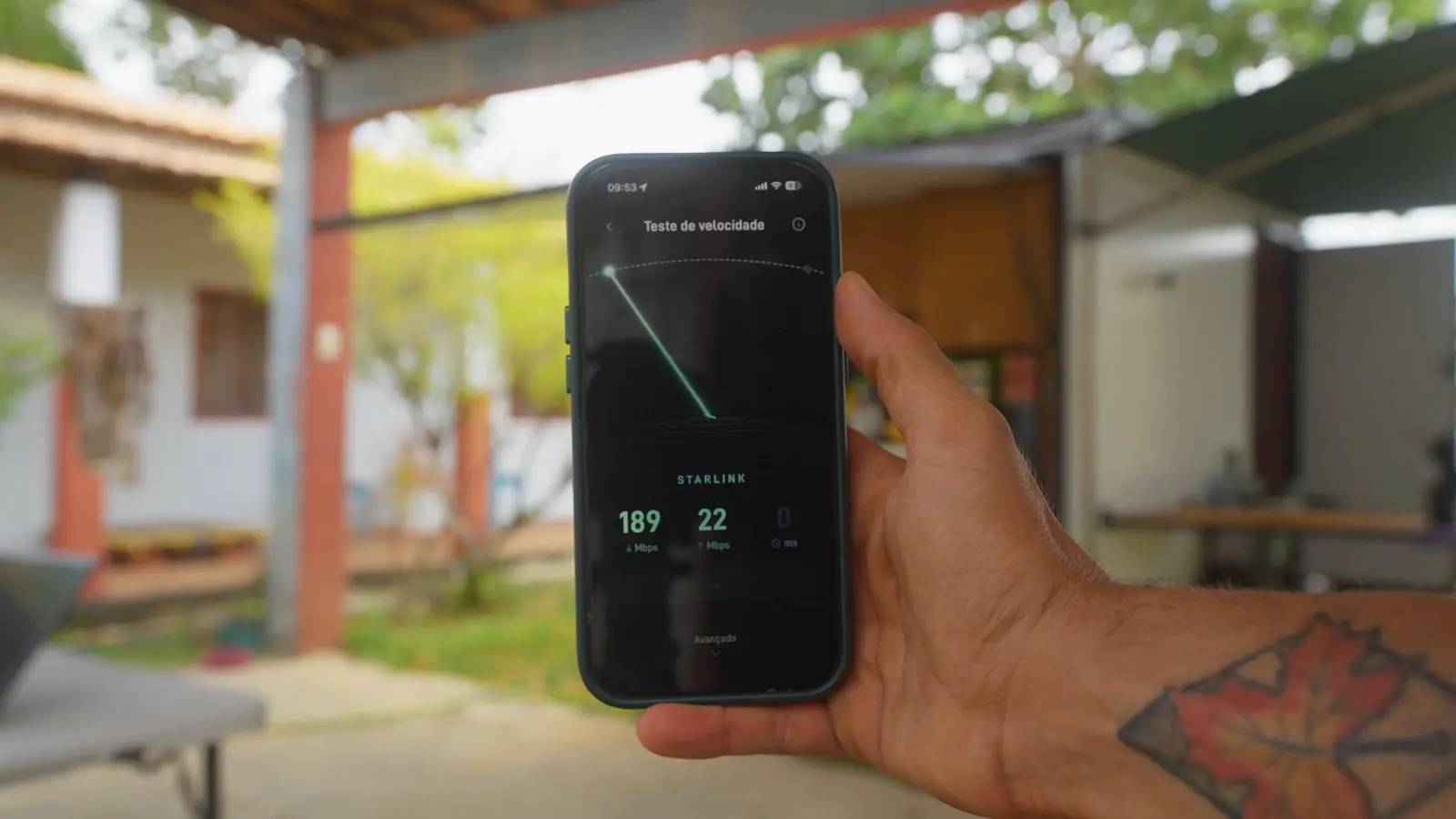
Normally the Starlink sits between 189 and 210 Mbps download and reaches about 26 to 30 upload. Right after you turn it on, it still takes a little while to gather data, and the upload was low. On the second test it was already 244 down and about 35 up, with a 42 ms ping. Pretty good.
110 V power in a 220 V trailer
At the farm the power is 110 V, and everything in the trailer is 220 V. So we agreed with the owner to run 110 only for the computers and anything dual-voltage, and leave the trailer on the solar battery, for lighting and the rest. We don't use much power. The outlet was 10 amps, and the only adapter I had wasn't very good. But it had to do.
Chácara Refúgio de Assis
The place really is a little farm, all green. We stayed in the parking area, and the house, with two suites (if I'm not mistaken), a kitchen and a bathroom, sits farther in. There's an area with a hammock and chairs under a huge tree, a barbecue area, a really big pool and a volleyball court.
And fruit everywhere: papaya, bananas still green, a lime tree with huge limes (I figured it out from the smell of the leaf), acerola, a cashew tree with no cashews and a giant mango tree, both out of season. There's also a tree loaded with a fruit I couldn't identify. If you know what it is, let me know.
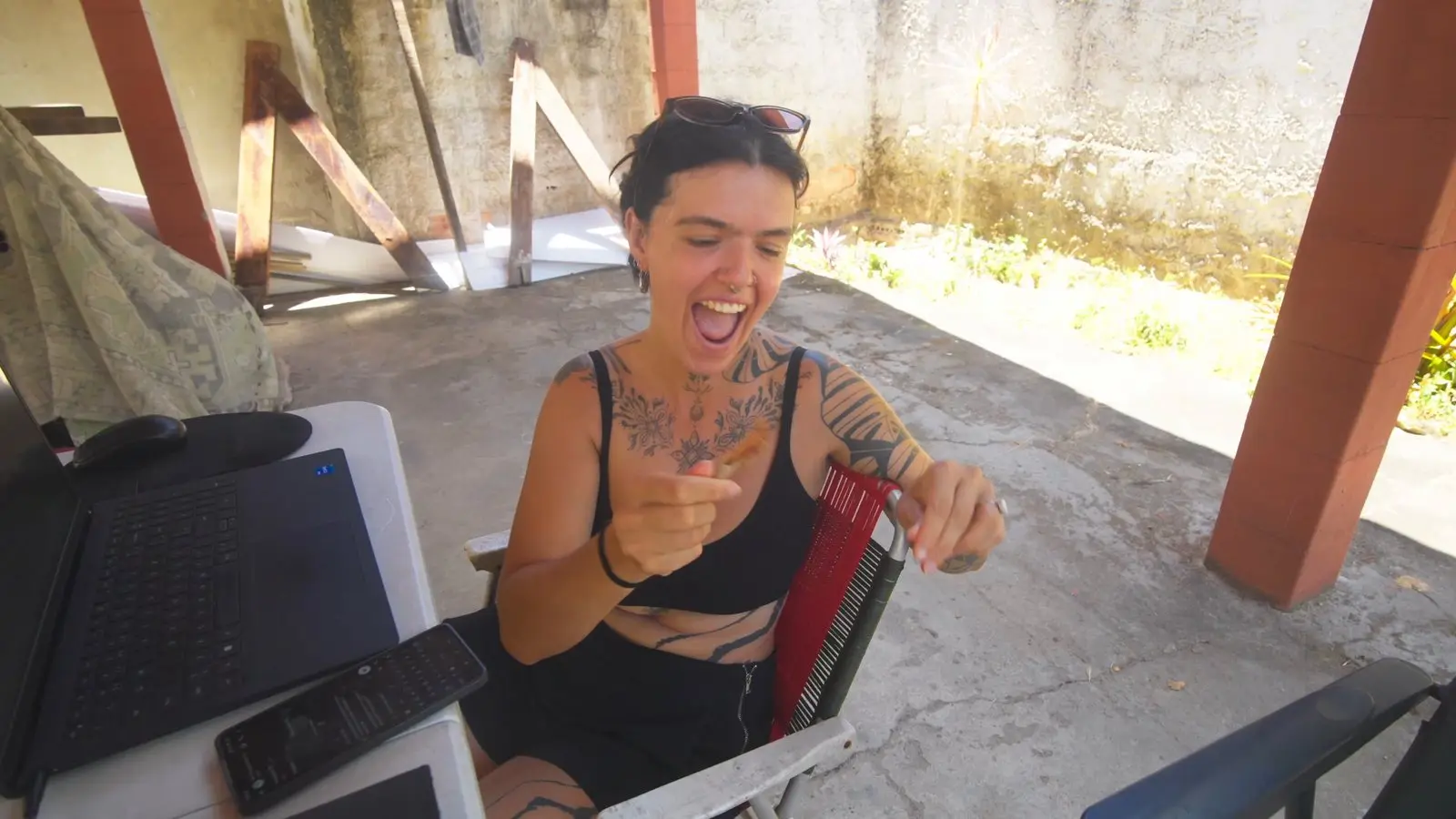
And there was tamarind. I forgot the name in the moment, but that's what it was. You just peel off the shell: it starts out tasty, but the more you suck on it, the more sour it gets. A juice made from it must be delicious.
Outside the house there's a little bathroom, very clean, and a big outdoor shower. And Nina, flat out on the floor from the heat, already had fresh water waiting for her.
Cold showers
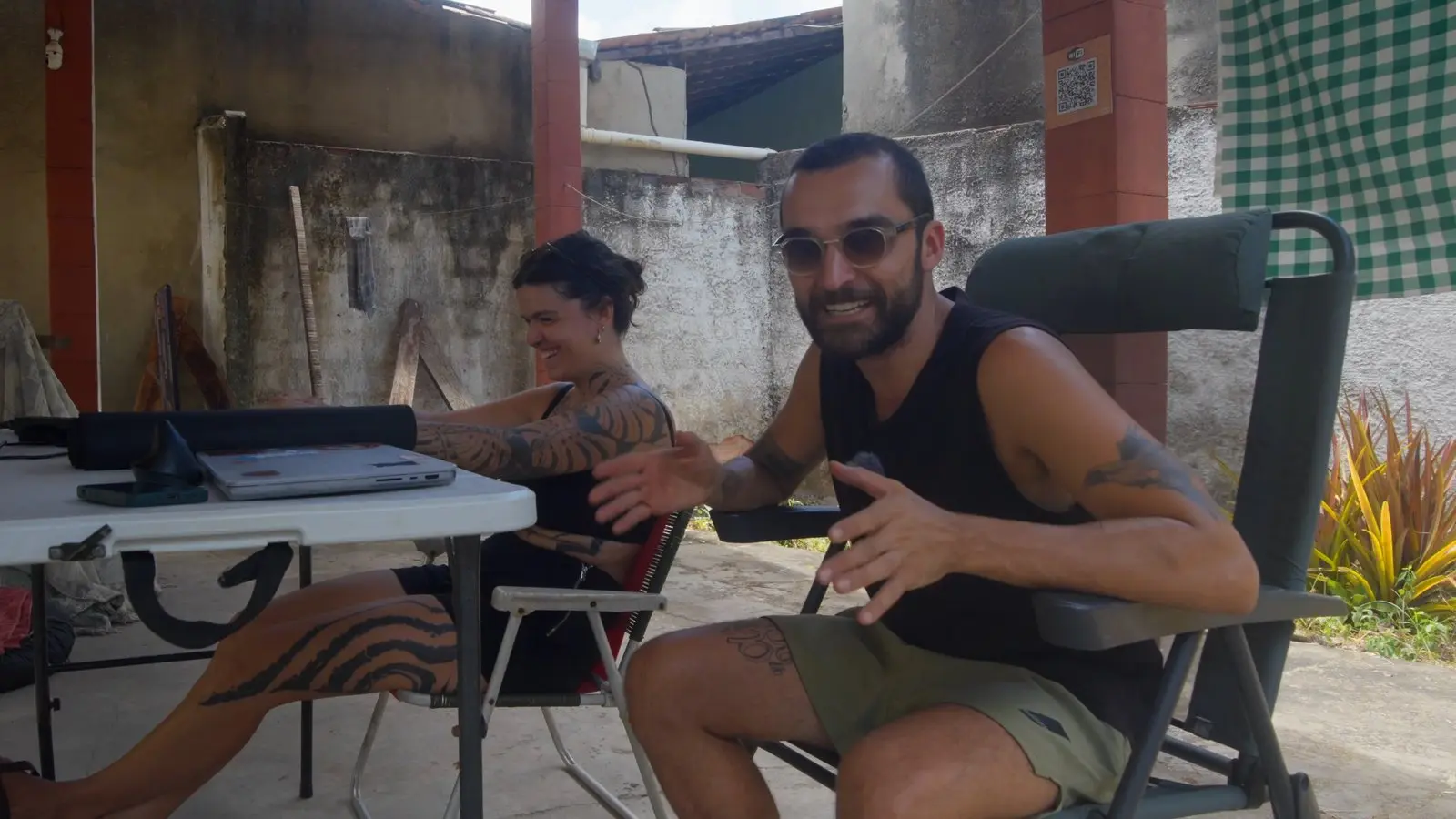
Lelê said something important that day: "I don't even mind cold showers anymore." Because that's also what living on the road is: you gradually give up some comforts. Of course it's nice to have hot water, but especially in the Northeast, with this heat, the shower isn't even cold. It's refreshing. It's fine.
The rings
To wrap up, something I take everywhere: my gymnastic rings, which I bought recently to hang from every day. It's good for the spine, it's good for everything. With two ratchet straps, they're really easy to set up. On the road, keeping up with exercise matters. Otherwise, you know how it goes.
That was our move with the trailer, from one place to another. I didn't get to show the inside, our setup, but in there everything was still a mess. If you enjoyed it, subscribe to the channel. See you in the next one!
Tags
- # mini trailer
- # camping
- # sergipe
- # life on the road
- # travel