A pre-dawn hike to Peito do Pombo, in Arraial do Sana: 16km, 9 hours of walking, and a sunrise that was worth every second.
Ever imagined doing a hike in the middle of the night to watch the sunrise from the top of the mountains?
In this adventure, we take you to see the famous Peito do Pombo, located in Arraial do Sana, a village in the municipality of Macaé, in Rio de Janeiro. It was 4 and a half hours going up and another 4 and a half hours coming down, a total of 16 km in 9 hours of walking. Each stage has different levels of difficulty: we took the wrong way, fell flat on our faces and ran completely out of battery on our phones. But the effort is worth every second.
Watch the full content
Trail information
- Where it is: Arraial do Sana, a village in Macaé, in Rio de Janeiro.
- Distance: 16 km (round trip), 8 km each way.
- Duration: 9 to 10 hours in total (including the way up and down).
- Timing: we left in the middle of the night and reached the top around 4:30, with the sun starting to show.
- Guide: not required. Guided groups cost around R$ 150 per person; it was just the three of us, following a map downloaded on Strava.
- What to bring: sturdy shoes, flip-flops for the way back, plenty of water, food and more than one flashlight.
- Difficulty level: Hard, with stream crossings among the rocks, ground damaged by rain and animals, and very steep moments that require light climbing and two rope climbs.
Where it is
The plan
Everyone who goes to Arraial do Sana talks about the challenging trail to see Peito do Pombo. Nina and I didn't want to miss this experience. That's when I met Bruno and Camila, at Camping Beira Rio, in Arraial do Sana, where we spent a few days camping. We spent two days and two nights there, right next to each other, chatting, and we hit it off right away. We're still in touch to this day. A week later, we were doing the trail together.
The idea was to catch the sunrise up there, take some photos, get some really nice drone footage and enjoy the day, obviously.
It's worth pointing out that Bruno had already done the full trail before, during the day, which is why we felt safe going up without a group. The big guided groups cost close to R$ 150 per person, and we didn't want to spend that money. If you don't have anyone to do the trail with, I recommend going with a group, and here's a valuable tip: Get in touch with Liniker Fraga through the profile @trekkingsanarj. Liniker became a great friend of mine there, and he takes groups of different sizes to see Peito do Pombo.
The preparations
To take on this trail, it's recommended to go with sturdy, comfortable shoes, and I also suggest bringing flip-flops for the way back. It's also extremely important to bring a good amount of water, some snacks to eat along the way, and flashlights. The final stretch of the trail is super dark because of the denser forest. Bring more than one flashlight so you don't risk running out of battery/batteries.
The first stage is a walk
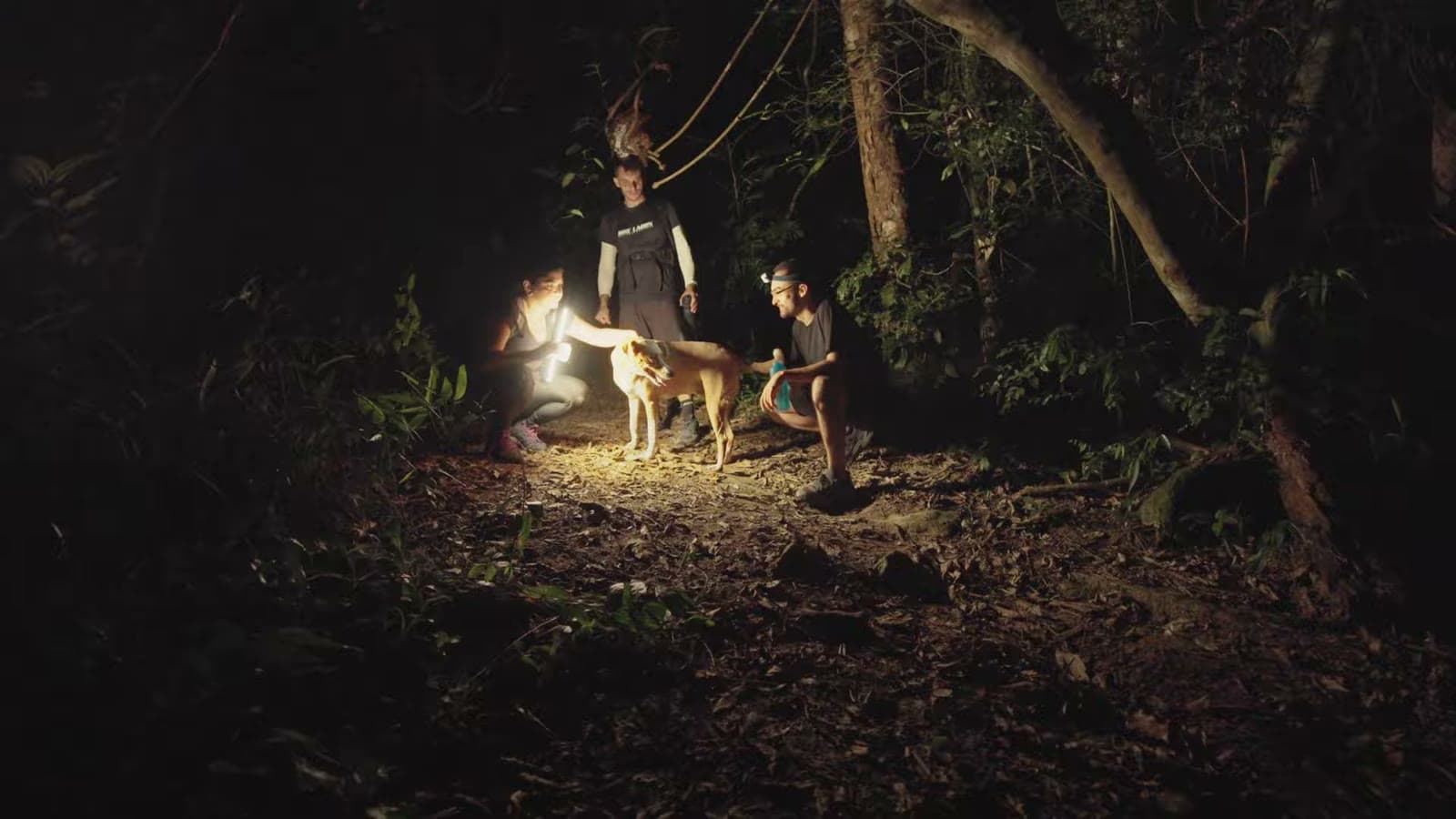
The first stage was the easiest, about an hour of light walking, with a gentle climb, to the first “checkpoint”, at the first gate. Nininha already knew the way. Our plan was to follow a GPS route Bruno had downloaded on Strava. You couldn't see a thing, but the valley around us was wonderful, even in the middle of the night.
Stop at Zezinho's House
The week before, Bruno and Camila had invited me to do this first part of the trail and visit a friend of theirs: a man named Zezinho, 70 years old, who lives in a house with no electricity in the middle of the valley. He welcomed us with coffee and told us that all the building materials were brought in by mule because the area is so hard to reach. There's no way to get there by car, let alone by truck; some locals make the trip by motorbike. Yes, picture that scene.
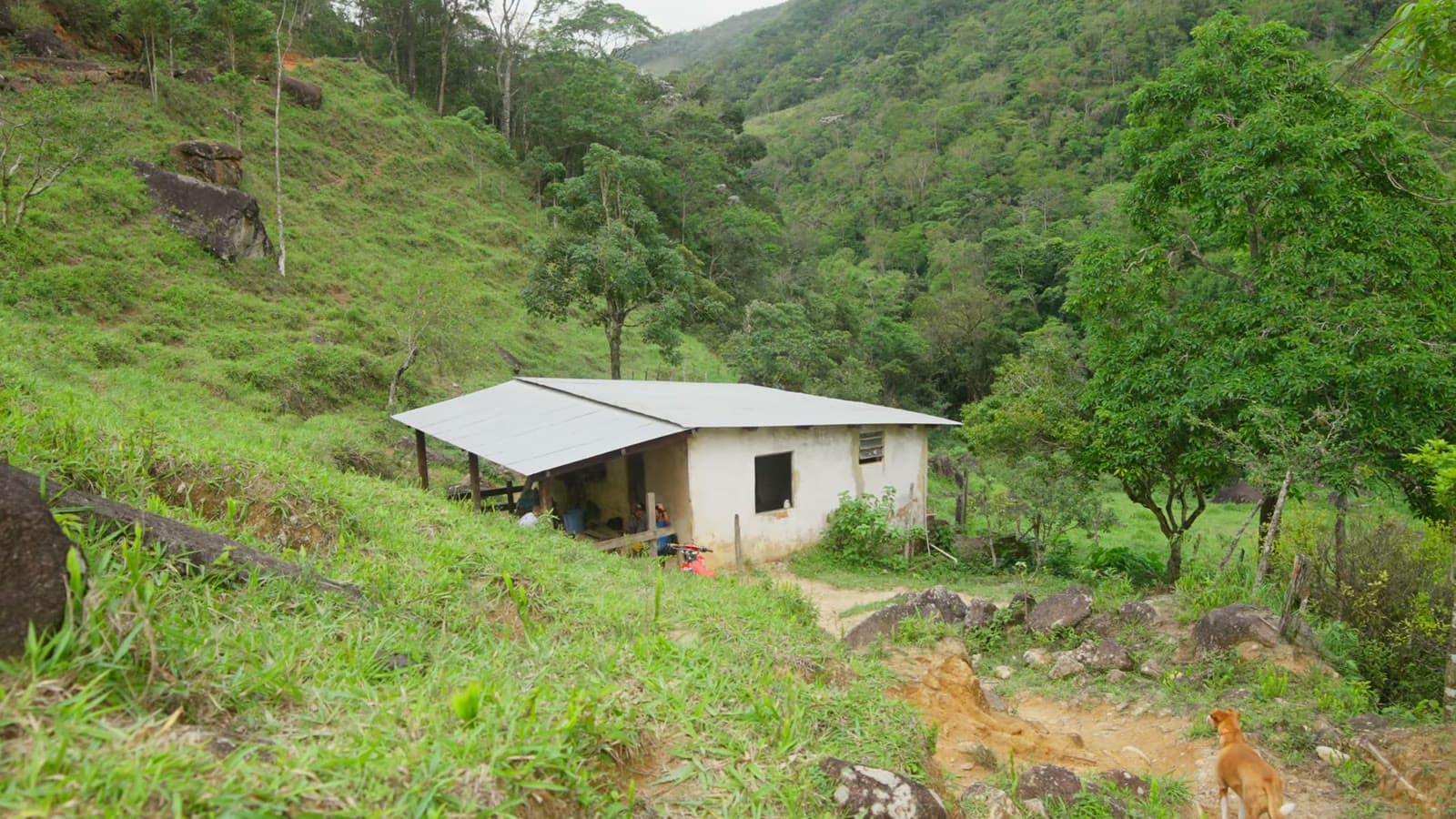
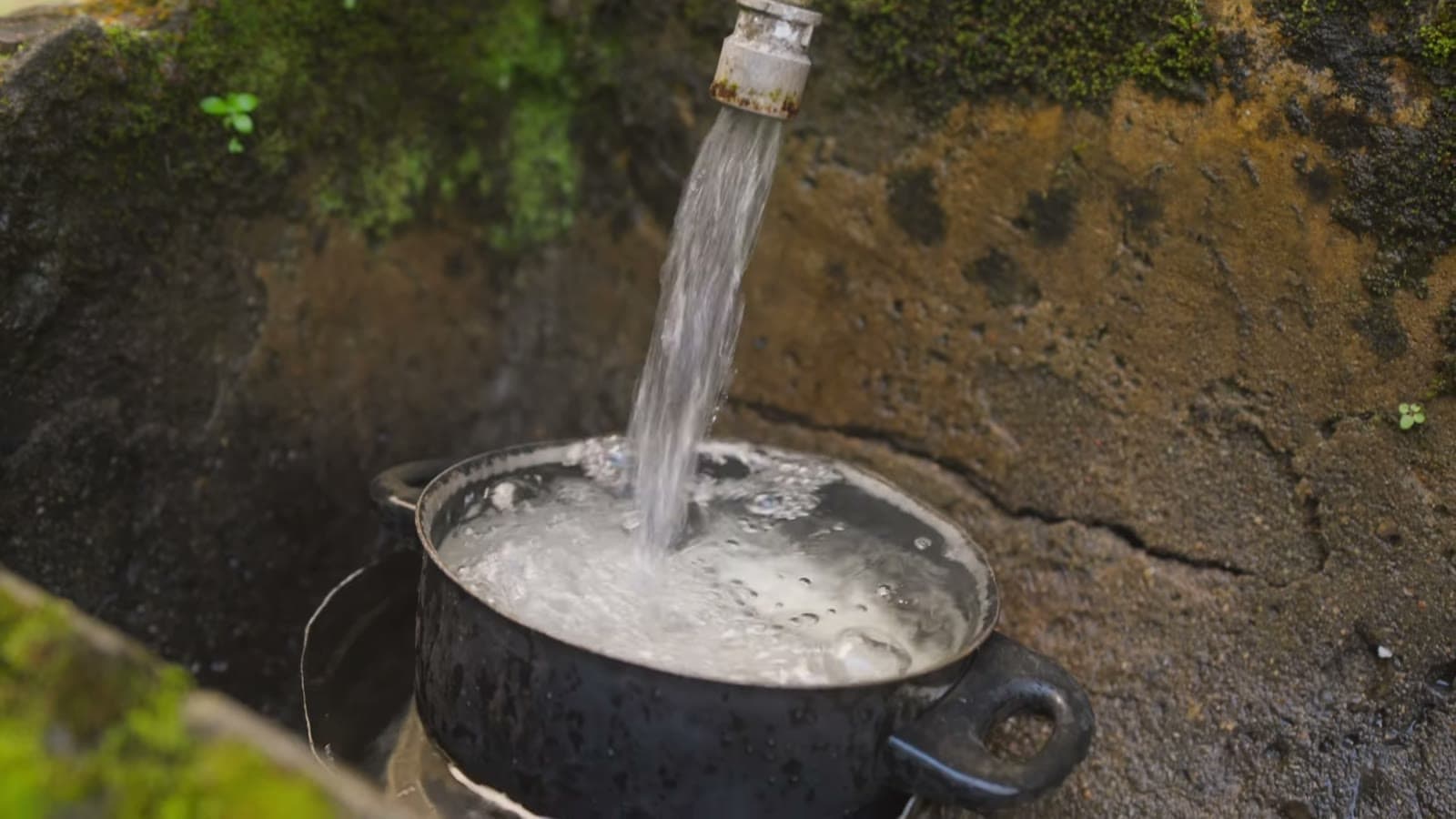
The house is super simple, but right next to it there's a spring of crystal-clear water. Outside there's a tap with running water that stays open all the time, ready to drink. During the day, this valley was wonderful.
Slippery Stretches and Erosion
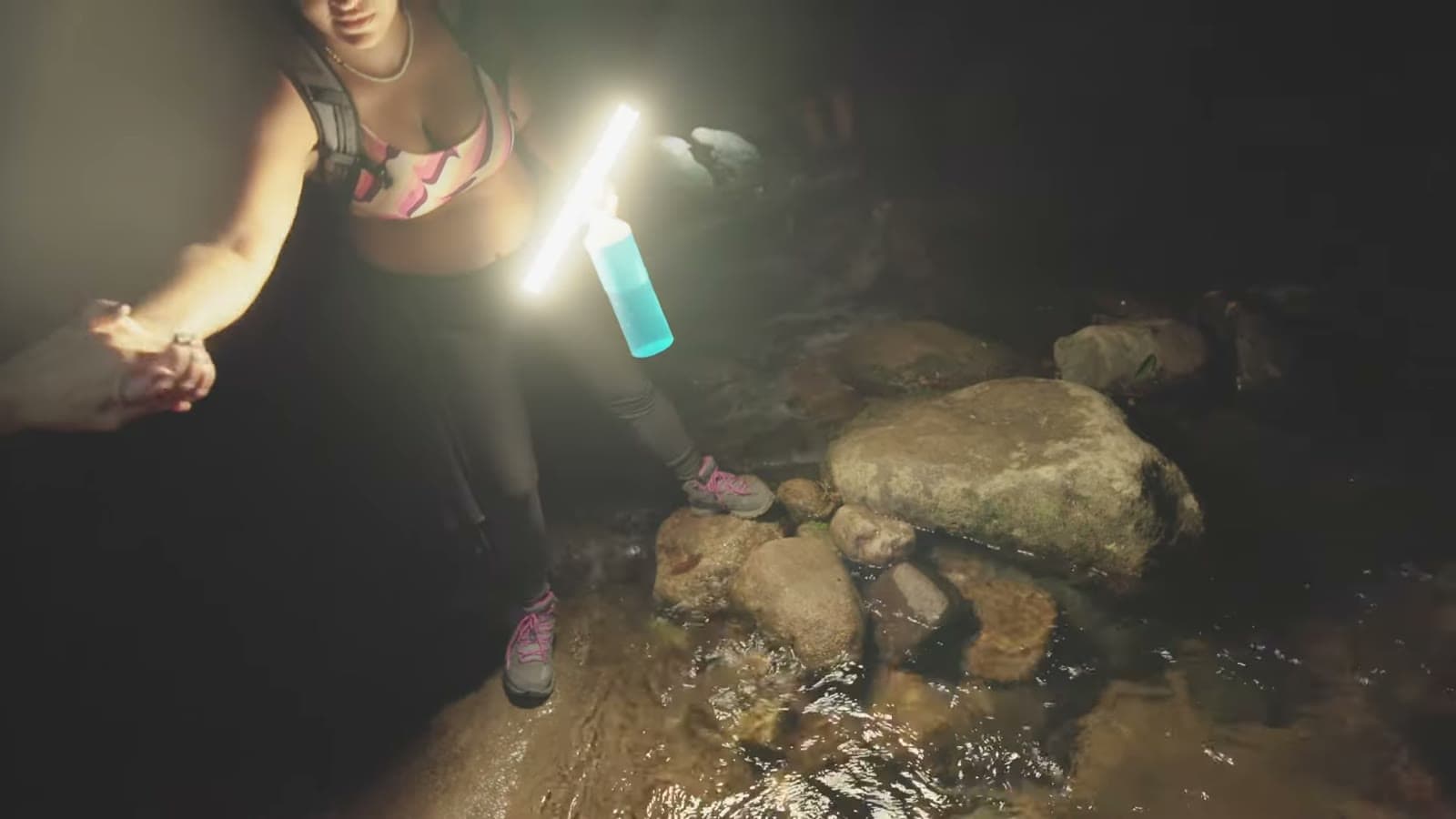
Back on the night trail, we went through a stretch that neither Nina nor I knew yet. There was a lot of horse manure on the ground, a real minefield, hahaha. We kept going, through a second gate and a small stream. These crossings might look dangerous, but the water flow was really calm: you just need to stay calm and step on the right rocks. Since I was carrying the heavier camera, Camila helped me at a few points.
After about an hour and a half of walking, we stopped to rest and drink some water. Then we passed areas where the ground had been eroded by rain and by the animals that pass through, forming passages through huge ditches. The ground was dry and slippery, making the walk more challenging.
Challenges of the Second Part of the Trail
The ground got even steeper and covered in tree roots. At times, it felt like climbing, grabbing onto trees to pull yourself up. We took the wrong way twice because of the darkness, but Nina, with her eyes shining in the dark, led us back to the right trail. The secret is not to panic!
At 3 in the morning we took a quick break to eat a banana. We had already walked 7 km, in the middle of the forest. The last hour of the trail was, no doubt, the hardest part: the terrain got even steeper and more damaged by erosion, with lots of fallen trees and exposed roots, which made it dangerous to catch your foot and fall badly.
Sunrise at the Top
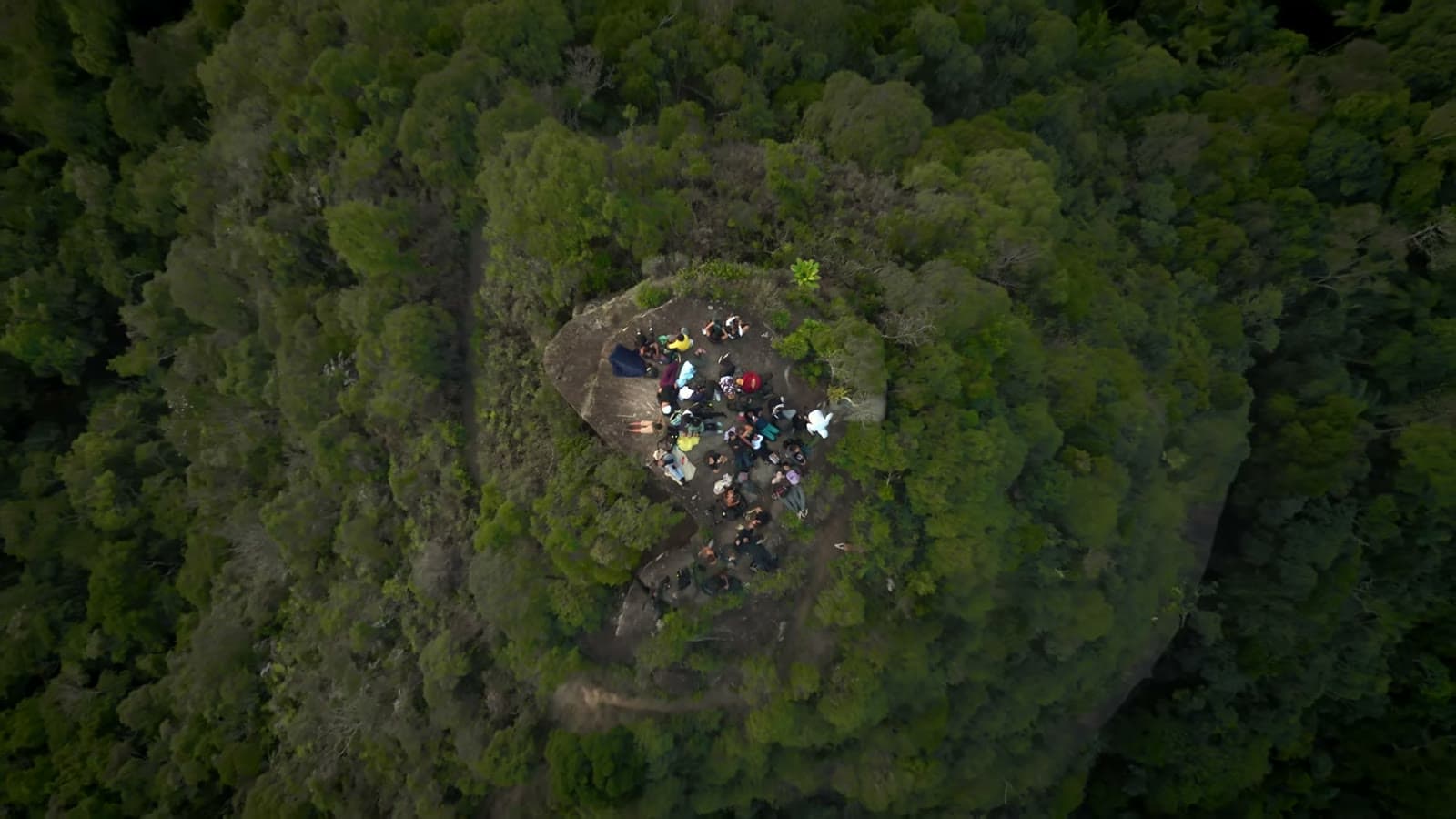
The final stretch required going around a huge rock, really hard to see with just my little headlamp, and tackling two rope climbs. Nina was the first to reach the top, of course. We got to the top at 4:30 in the morning, and the sun was starting to show on the horizon. Two big groups of people, who had gone up before us, were already there resting.
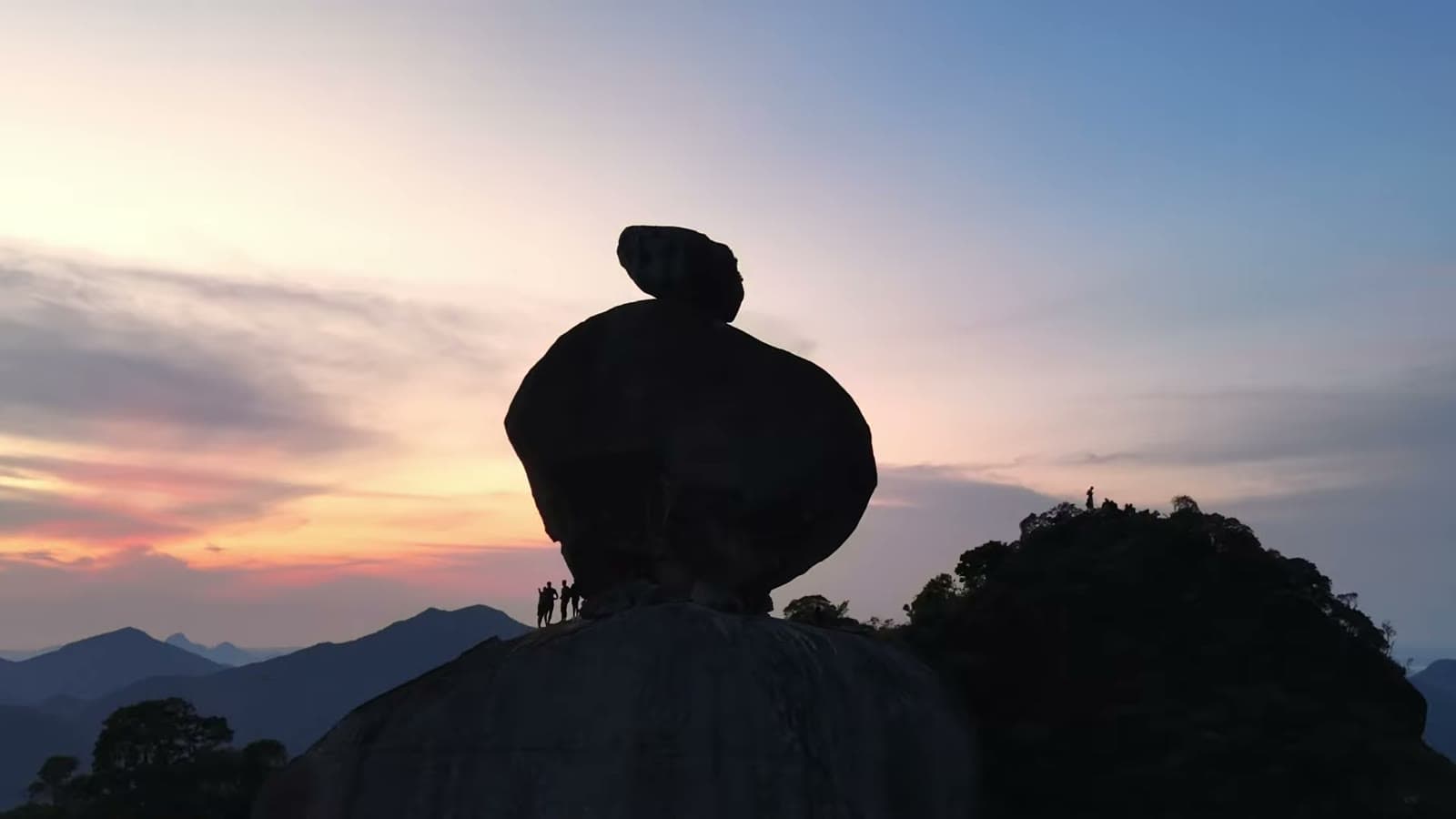
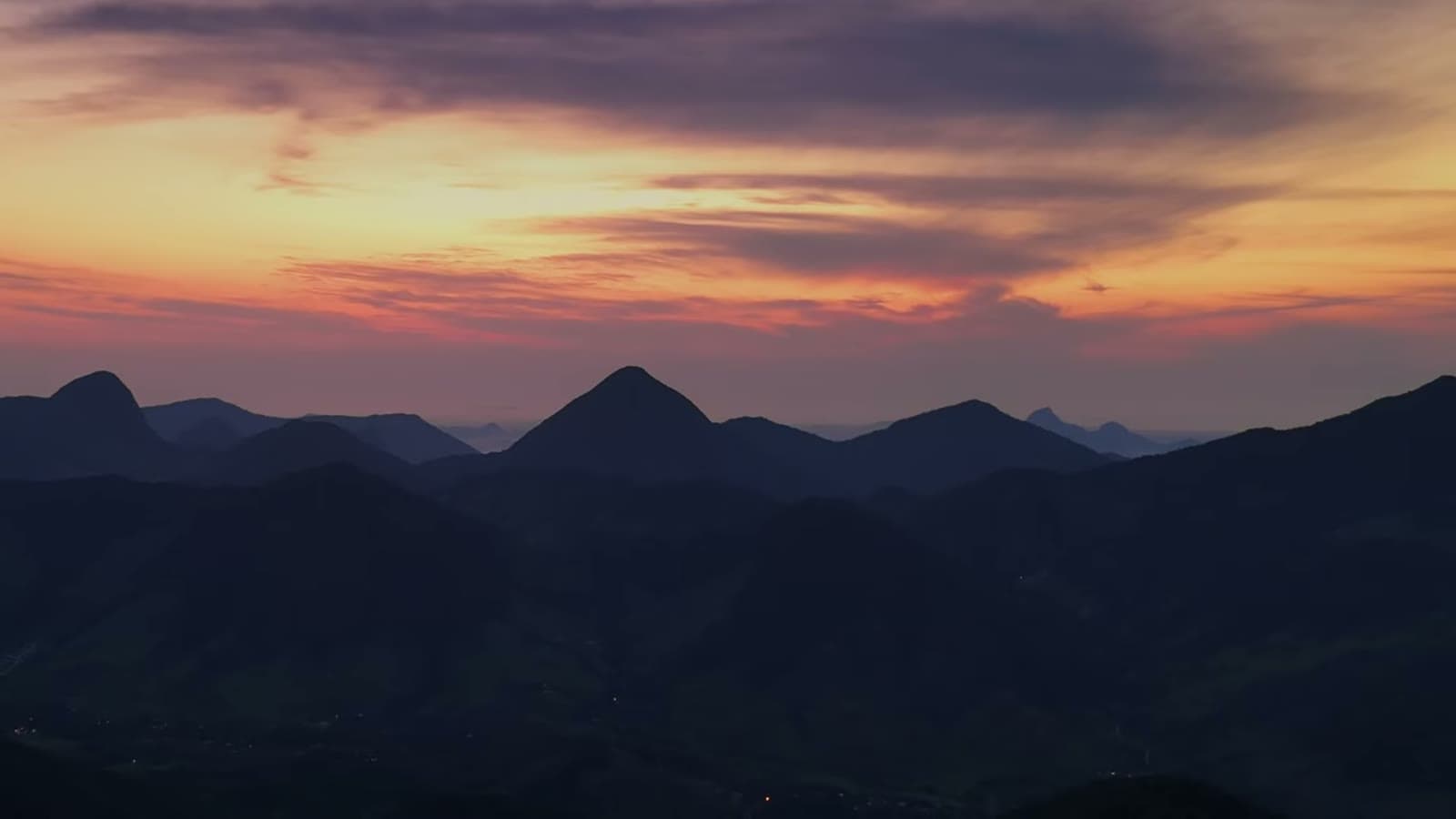
Watching the sun slowly rise on the horizon was extraordinary. Within just a few minutes the sun was already up, and there was just enough time to get some aerial shots. I found the change of light in the sky, and consequently on the rocks, amazing.
The Mysticism of Peito do Pombo
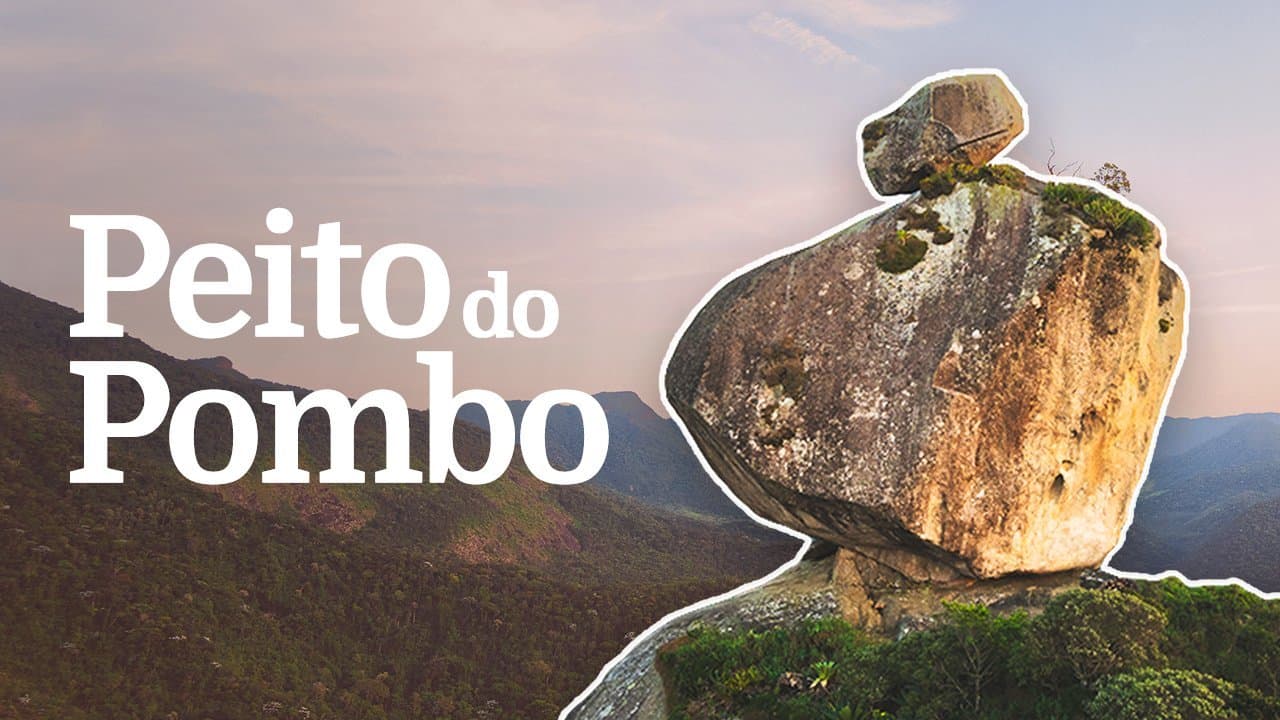
There's a whole mystique around Peito do Pombo because of where it sits: right in the middle of the three “pyramids of Sana”, which are mountains truly shaped like pyramids. It's impressive to imagine how the two rocks of Peito do Pombo ended up positioned this way, in this exact spot, fitted together, actually forming the figure of a pigeon's breast. Nature really is impressive.
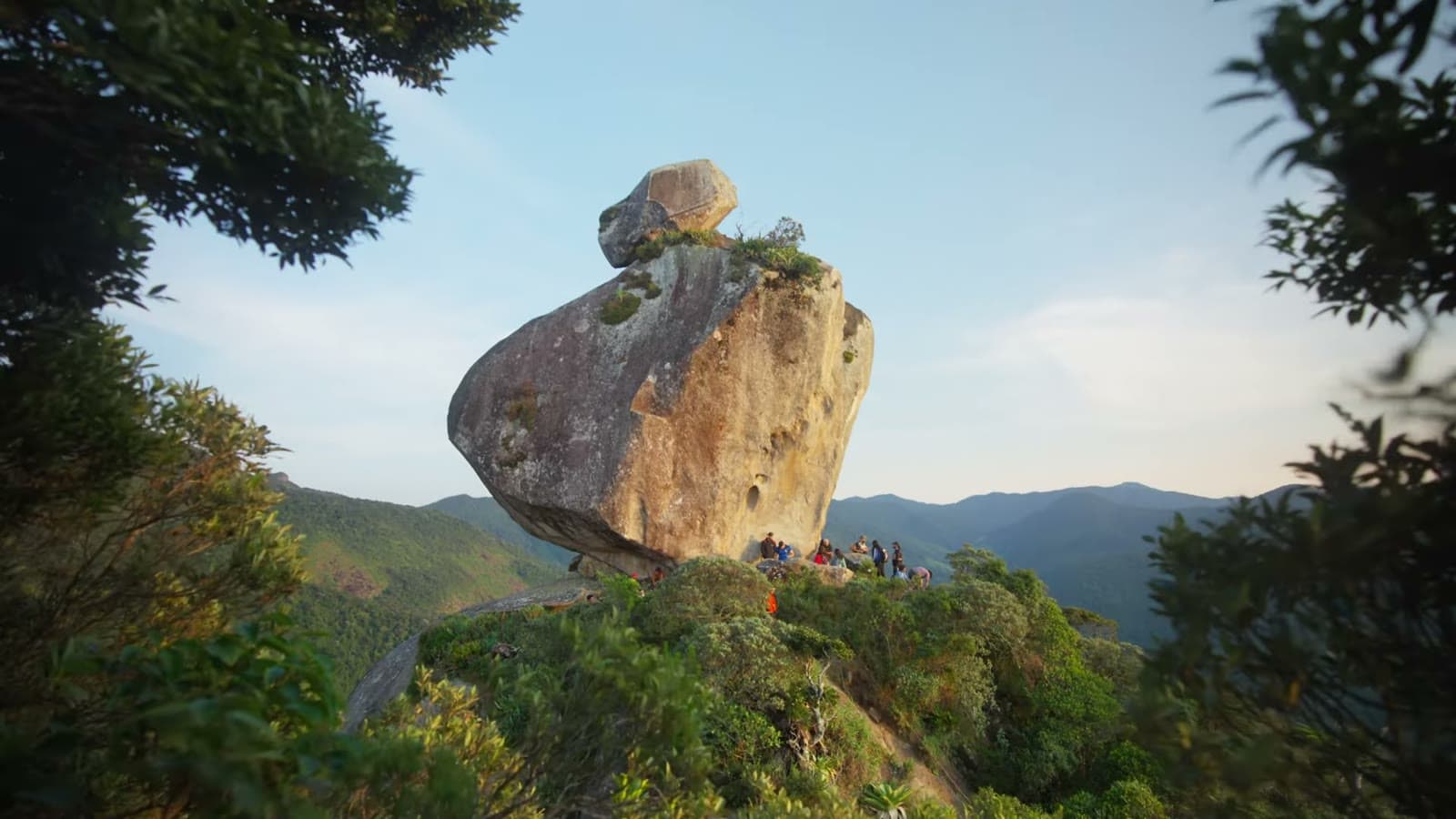
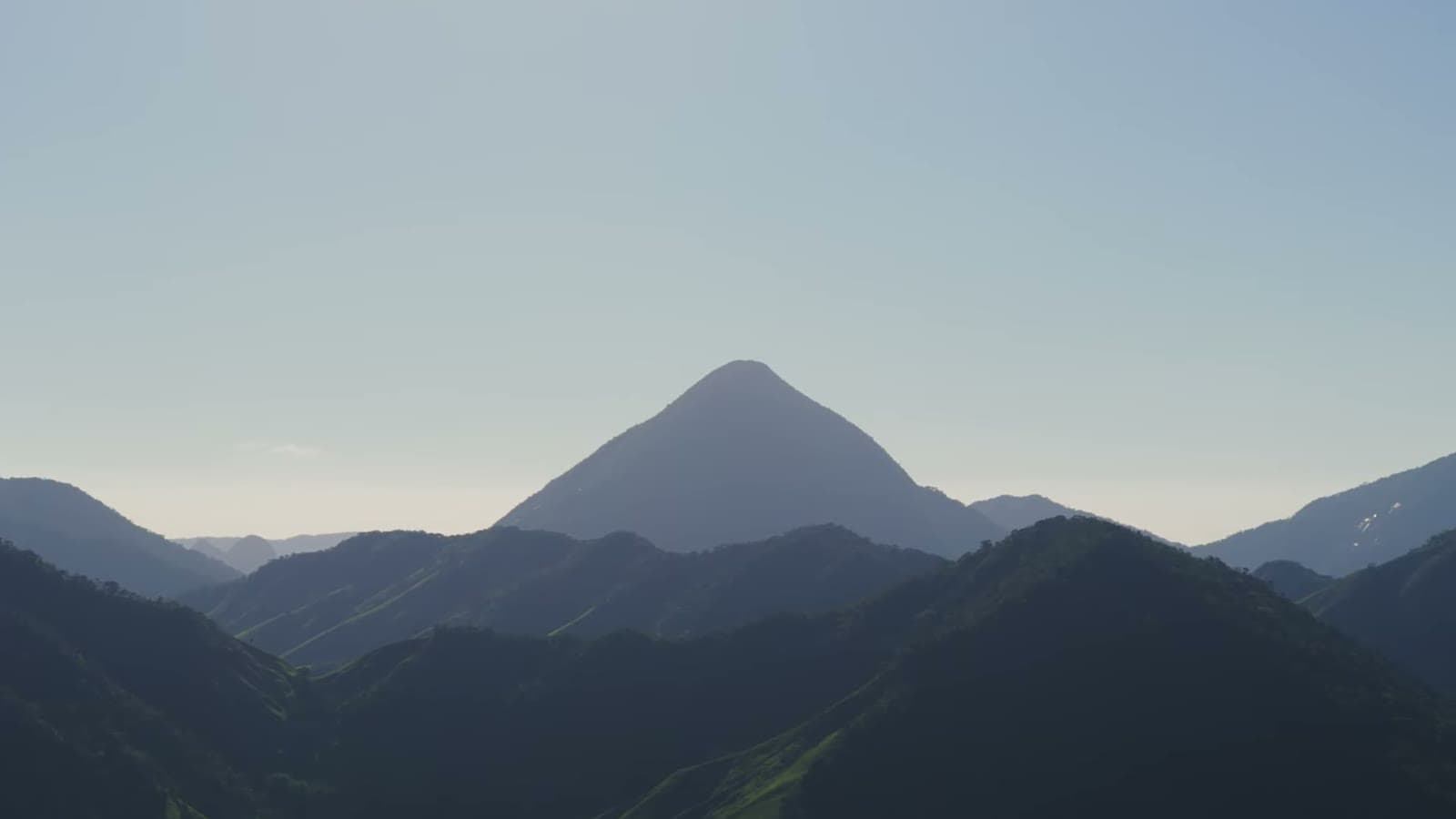
The trail is considered hard, but of course it depends on each person's fitness. I consider myself a physically active person, but I had never done such a long trail, and in the dark. It was pretty exhausting, but the effort was worth every second for this wonderful view.
We stayed up there for about 40 minutes, enjoying the view. I shot aerial footage with the Drone too. It was amazing. When landing, the drone slipped on the rock and broke two propellers, but nothing serious: I had spare propellers. Sometimes, to get these shots, you take a risk with your gear. It's part of it. We left early so we wouldn't catch the strong sun on the way back.
The Challenge of the Descent
To be totally honest, I think the descent was harder than the climb. The ground was steep and slippery, with some huge steps because of the roots. Nina found alternative paths, showing off her skill: on the rope sections, she always found an easier way through, and having four paws helps a lot. She did better than all of us, and she was used to it, since I'd already done other long trails with her.
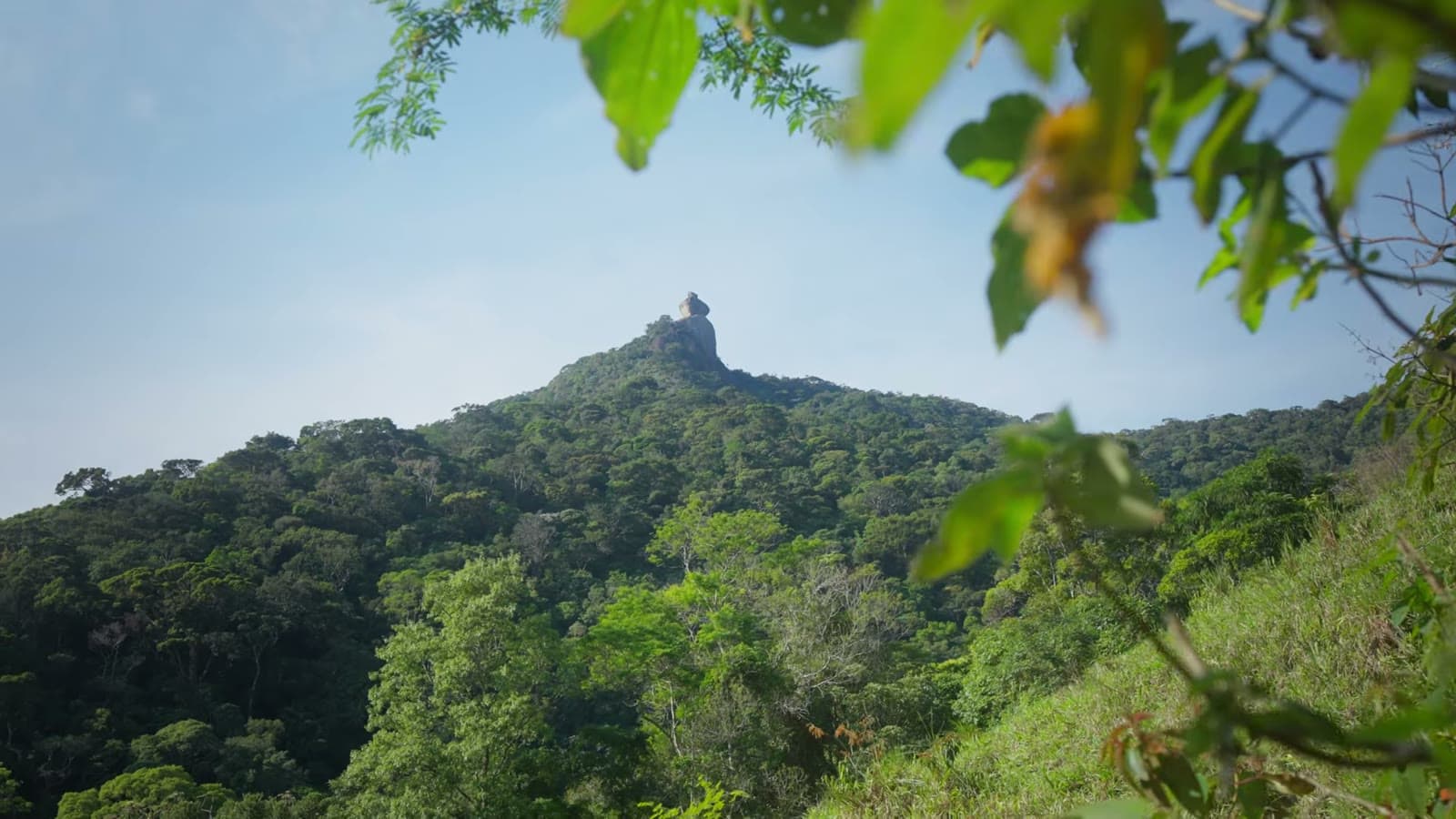
Along the descent, it was really beautiful to see other angles of Peito do Pombo that we couldn't see at night, and how rough the path we had climbed in the dark really was. All of us already pretty tired. My camera ran out of battery, and by 7 in the morning I had already taken off my sneakers. Our feet, knees and toes were starting to hurt.
Bruno slipped and fell to the ground twice. I managed to fall flat on my face once too, at one point when Nina flew past me and pushed me. We stopped several times to hydrate, take off our shoes, rest a bit and listen to the sound of nature.
Reaching the End of the Trail
We got back to the campsite around 10:40 in the morning, completely exhausted, with no battery left on our phones, and Nininha totally wiped out. This night hike was challenging, but rewarding. Every step was worth the view and the experience. Highly recommend it!
Tags
- # arraial do sana
- # rio de janeiro
- # night hike
- # nature
- # challenge