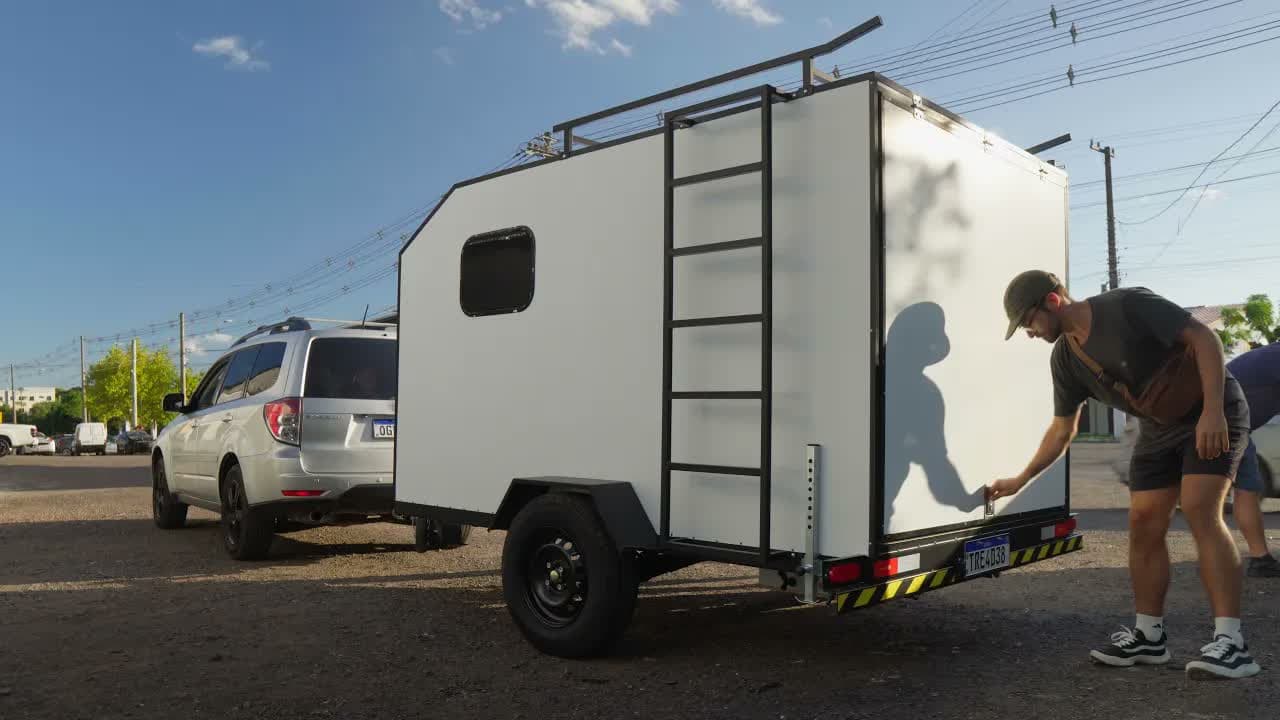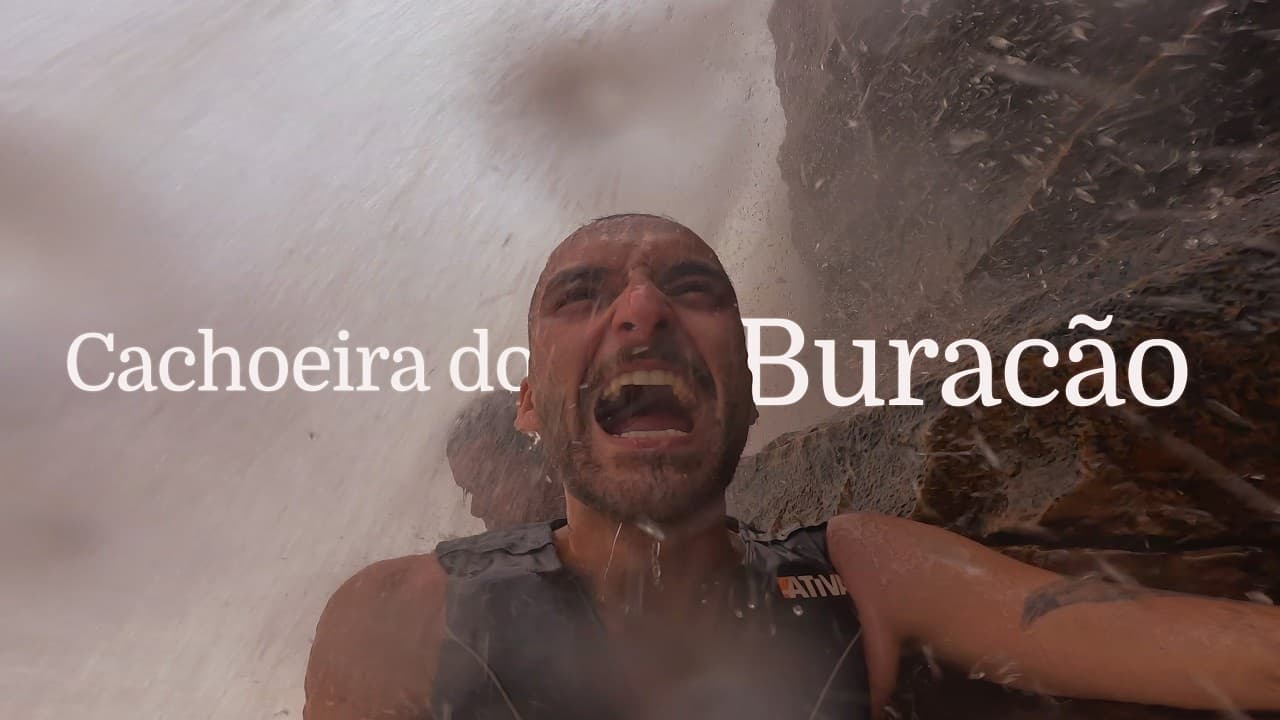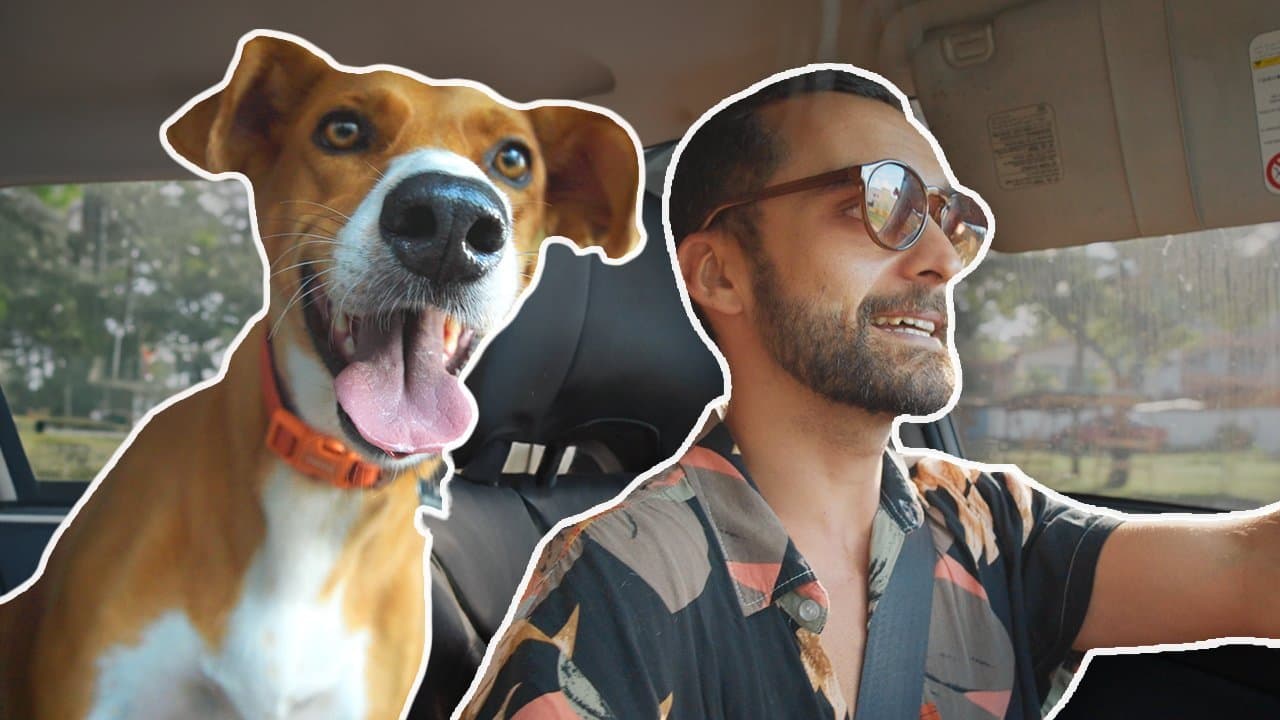
From Porto Alegre to Bahia: the first 5,000 km of the trip, turning a Subaru Forester into a home on wheels, and the hardships and paradises along the way.
Hi friends!
Today I'm sharing with you some of the highlights we experienced in this first phase of traveling around Brazil.
For the curious: we left Porto Alegre, in Rio Grande do Sul, and went through a few states like Santa Catarina, Paraná, São Paulo, Rio de Janeiro and Espírito Santo until we reached Bahia.
Traveling around Brazil has been the most transformative experience of my life.
Today, happily, I can share with you that we've hit the 5,000 km mark, with our car already showing 182,000 km on the odometer. On July 27, 2023, when Nina and I left Porto Alegre, I reset the trip counter to keep track of our progress.
Watch the full content
Info about the car and the route
- Car: 2011 Subaru Forester, XS model, Boxer engine.
- Departure: Porto Alegre, July 27, 2023, Nina and me.
- Route: Rio Grande do Sul, Santa Catarina, Paraná, São Paulo, Rio de Janeiro, Espírito Santo and Bahia.
- Mileage: 5,000 km of travel, with the car showing 182,000 km.
- Conversion: three months of work and about R$ 7.000, with nothing spent on labor.
- Roads: asphalt from Porto Alegre to Vitória; packed dirt to reach the beaches of southern Bahia.
About our car-home: a Subaru Forester
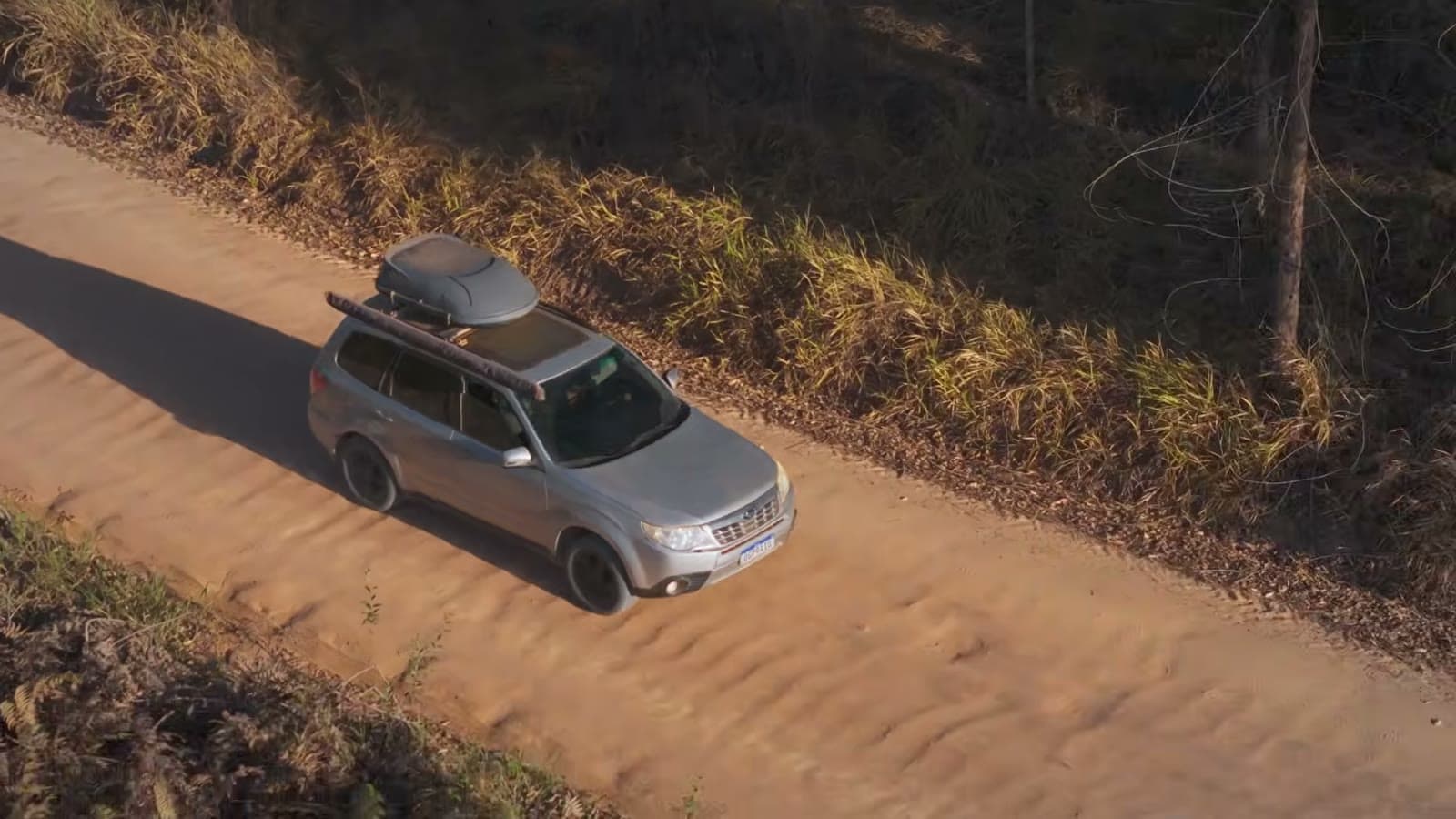
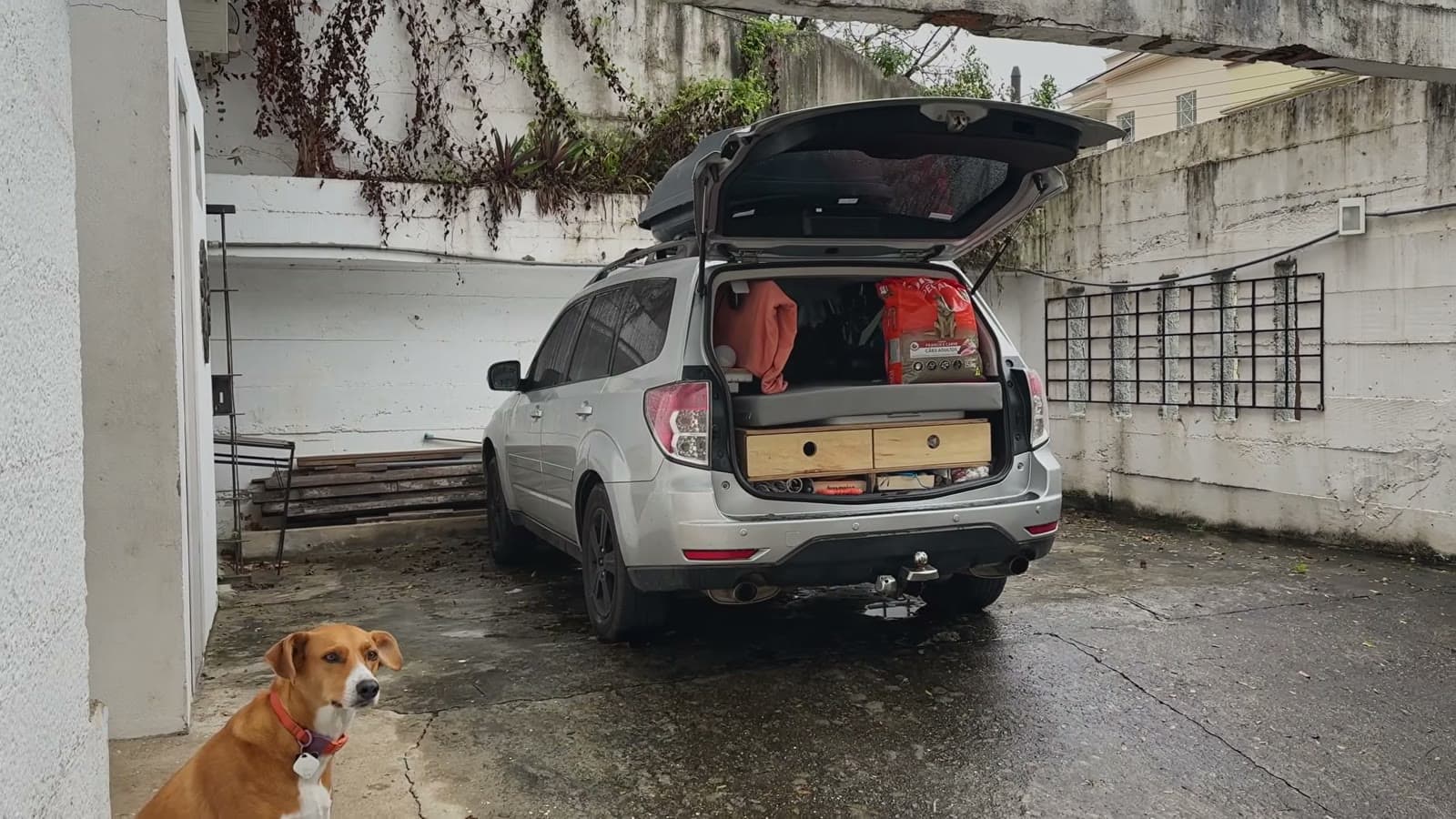
We're traveling in a 2011 Subaru Forester, the XS model, with a Boxer engine. I bought this car in 2021 for R$ 44.000. At the time of purchase, the car had 163,000 km on it, but I felt it was in excellent condition. I spent about R$ 5.000 to R$ 6.000 on preventive maintenance, which fit perfectly with the R$ 50.000,00 investment I was willing to make at that moment.
A little about the history of Subaru
For those who don't know it, Subaru was one of the first Japanese car brands, founded in 1953. The brand became famous for the performance of its cars in rally competitions, standing out for its all-wheel drive and an excellent driving position.
A Revolution in the Car Industry
In 1972, Subaru launched the Leone 4×4, the world's first mass-produced car with permanent all-wheel drive. This innovation revolutionized the car industry, paving the way for new models and earning Subaru a prominent place in the SUV market.
On the road, I'm finding it a really strong car, really safe and really comfortable, plus it has a lot of room inside.
Inspiration for the Conversion
I've always liked traveling and camping out in nature, which led me to research all kinds of vehicle conversions. I found lots of references from people who converted their own Subaru Foresters in the United States and Europe, like Allison Anderson, a Canadian content creator who traveled a lot in a Forester. Based on that, I decided it would be possible to live inside the car with some comfort.
I chose to convert the Subaru because I already had the car. I wouldn't need to swap it, or think about a van or some bigger car, and I didn't want the hassle of selling the car to buy another one and only then think about the conversion. And most of all: I wanted to spend as little as possible.
So how did the conversion go?
It took three months of work to finish converting the car. I started with sketches on paper, took every measurement possible with a tape measure, then moved everything into a web design software called Figma. Along the way I also made a huge list of all the items I wanted and, little by little, I built our car-home 🙂
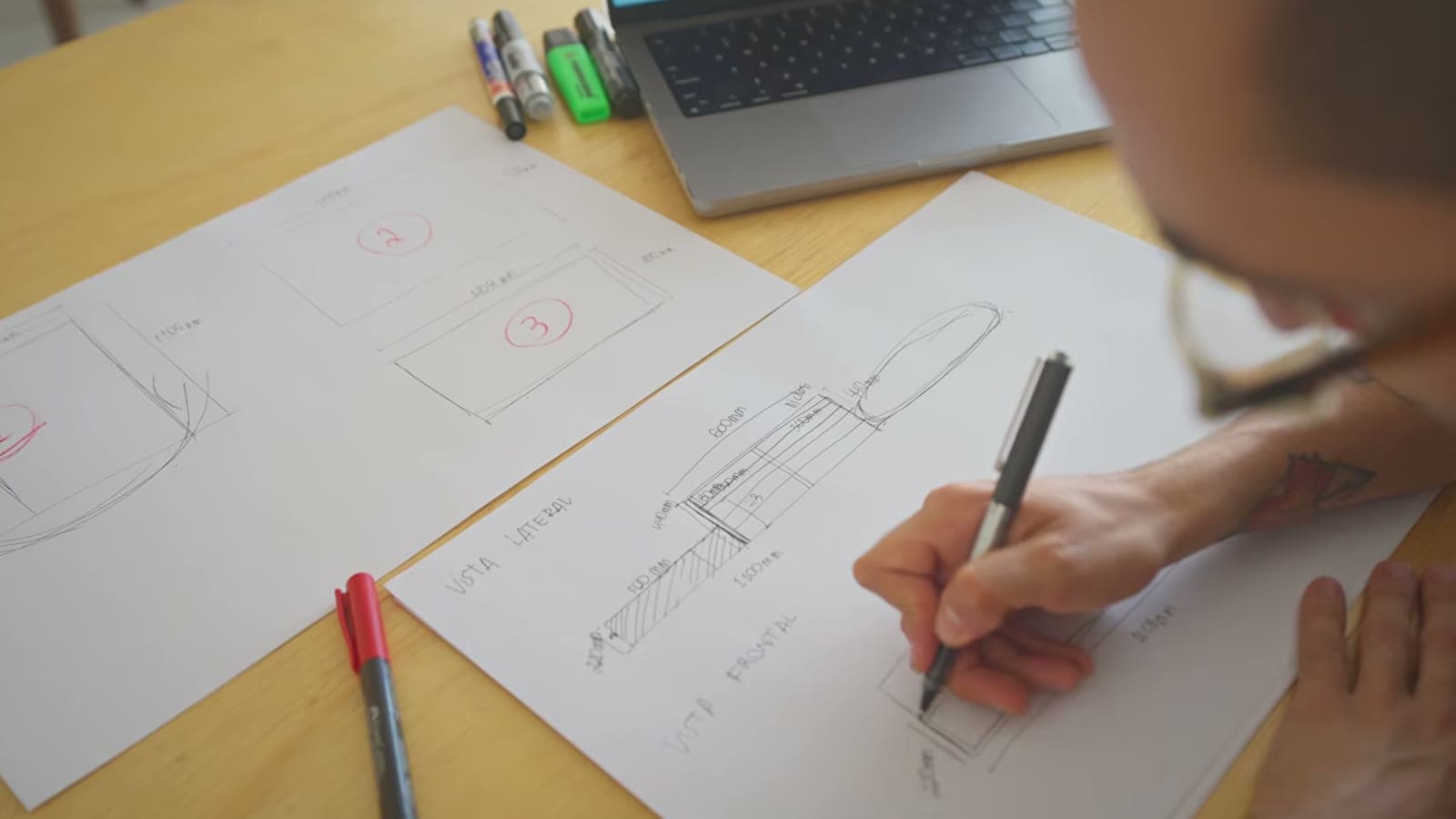
I took out the three back seats right at the start: I needed to take the car to the mechanic to change the brake pads anyway, so I asked him to remove the seats. After that, I spent hours in the garage looking at the car from every angle, measuring and taking notes, until I got to a drawing I was happy with.
Figma isn't made for this kind of drawing, but I find it really intuitive, and on top of that it's free. I draw each piece thinking in millimeters and write the measurement on top of it. That way, when I send the drawing to the lumber yard, they already know the exact size of each cut.
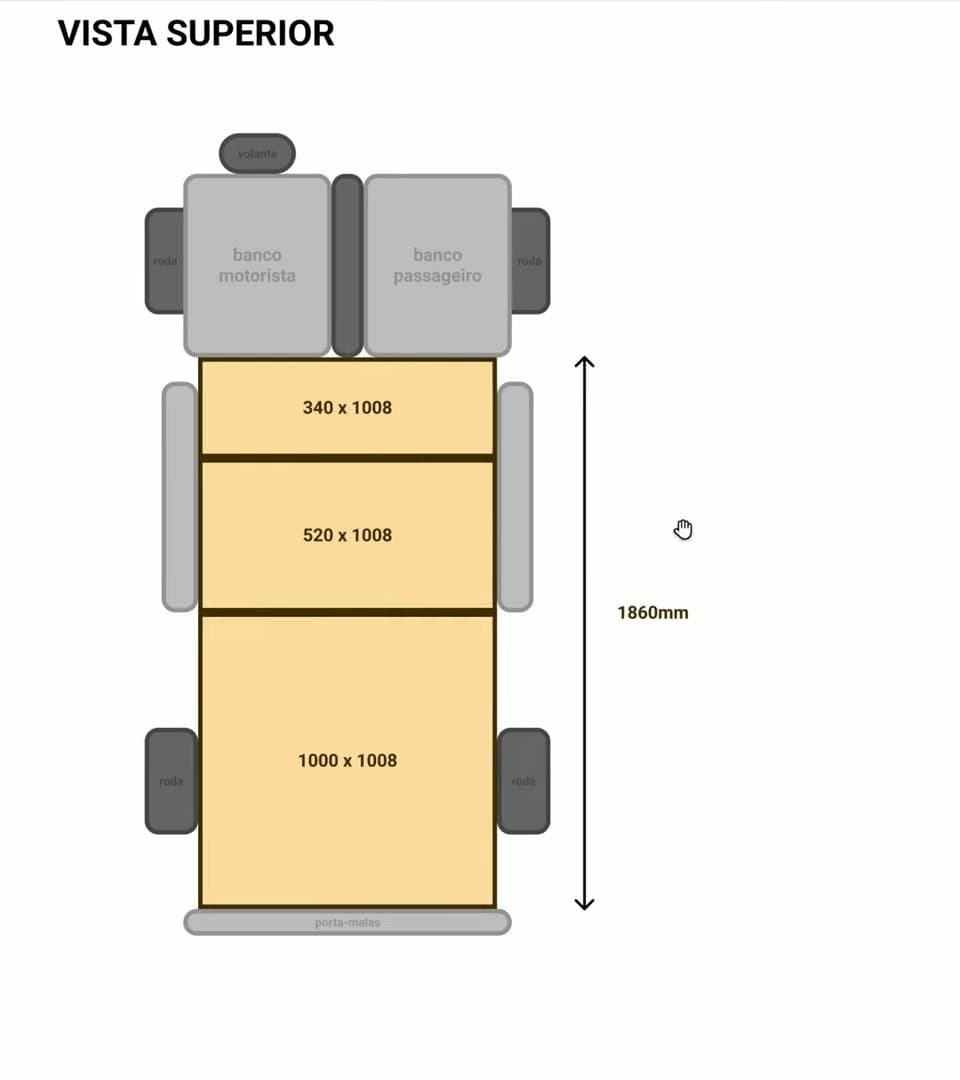
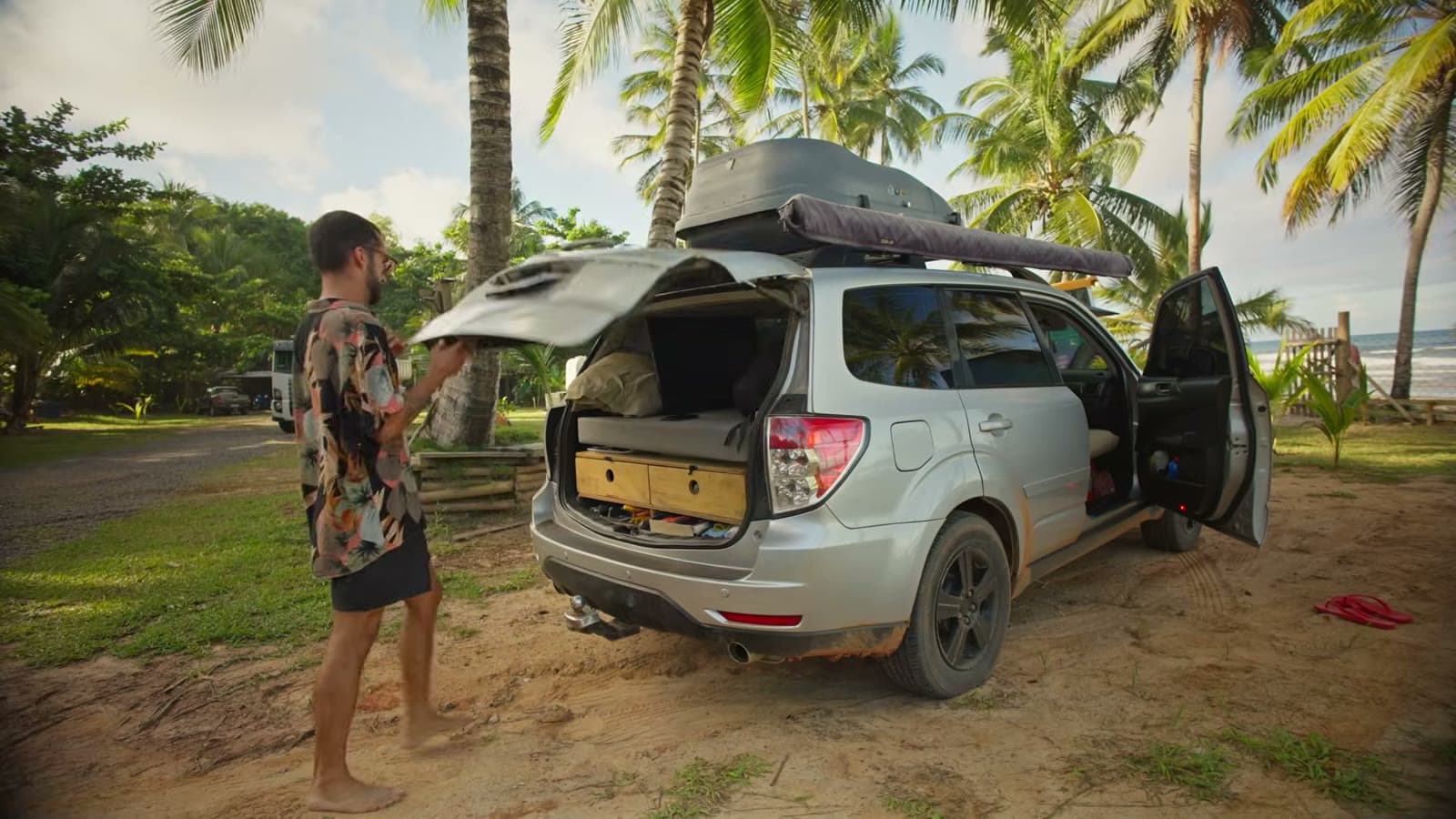
With the front seats pushed all the way forward, the car has 1.86 m of free length. I split the platform into three parts: a 1 m one, running from the trunk to where the back seats used to start, a middle one, and a 340 mm one that I only use when the seats are tilted forward. That last one folds up when it's time to drive. The platform raises the floor by 18 cm, and underneath it are the big drawers, 73 cm deep, on telescopic slides. Designing a drawer was the hardest part: I'd never done one.
The custom mattress is 1.86 m long, exactly the length of the wood. Since I'm 1.70 m tall, there's a little room left for Nina, who I was almost sure would sleep at my feet.
Here's an important tip for anyone who wants to make wooden furniture:
For all the furniture I've ever designed and built, I used wood ordered from Madelei, a lumber yard very well known for quality and good prices in Porto Alegre and the surrounding area. I sent them the plan, and they take about 10 days to deliver all the wood already cut.
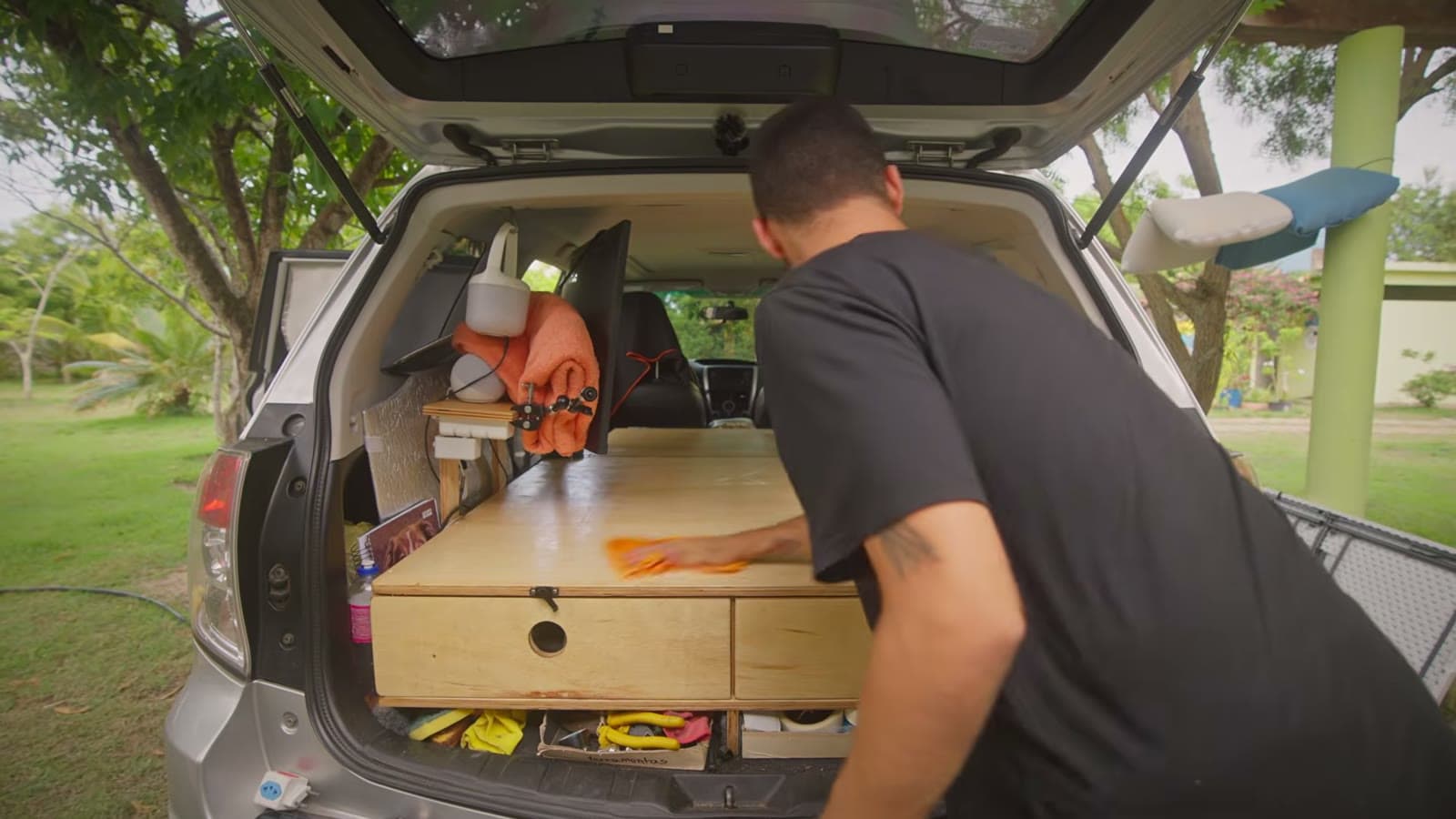
In short, I'd say the major modifications I made to the car were these:
- Removed the three back seats;
- Built a wooden structure with two big drawers and a bed;
- Installed a portable fridge and a power outlet setup;
- Created a closet for clothes and other items
The portable fridge opens in a little side drawer, and the outlet setup sits right next to it. On the other side is the closet, with clothes and other stuff.
Conversion Costs
It was roughly R$ 7.000,00 of investment to convert the car. I know, it may seem like a lot, but once you start researching the subject more, you realize what each camping item is worth. Just to give you an idea, you know those rooftop tents we see on cars? One of those costs around R$ 12 mil reais. Because of that, I think my R$ 7 mil investment was totally worth it 🙂
Here are the details for you:
- Wood: R$ 2.000
- Custom mattress: R$ 1.000
- Portable fridge: R$ 1.600
- Retractable awning: R$ 1.800
The rest went on the drawer slides, screws and other necessary accessories.
One upside is that I didn't spend anything on labor, since I did it all myself, with my dad's help. I designed the plan, and together we sanded all the wood and made the cuts. If you have the chance to do your own conversion on your car, do it! Luckily my dad has some tools in the garage, and that made it possible to take on this conversion.
Watch the full content
Challenges on the Road
For me, driving is the most stressful part of the trip. It's the moment when we're most vulnerable: the car packed, full of stuff, and Nina along. If a tire goes flat, I'll have to stop right there with her inside the car. Driving slowly is the first item on the safety list. I always try to keep a steady average speed, 90 to 95 km/h on asphalt and 40km/h on dirt roads. So far, we haven't had any mechanical problems and I haven't had to change a single tire, but the road can always surprise us.
Road Conditions
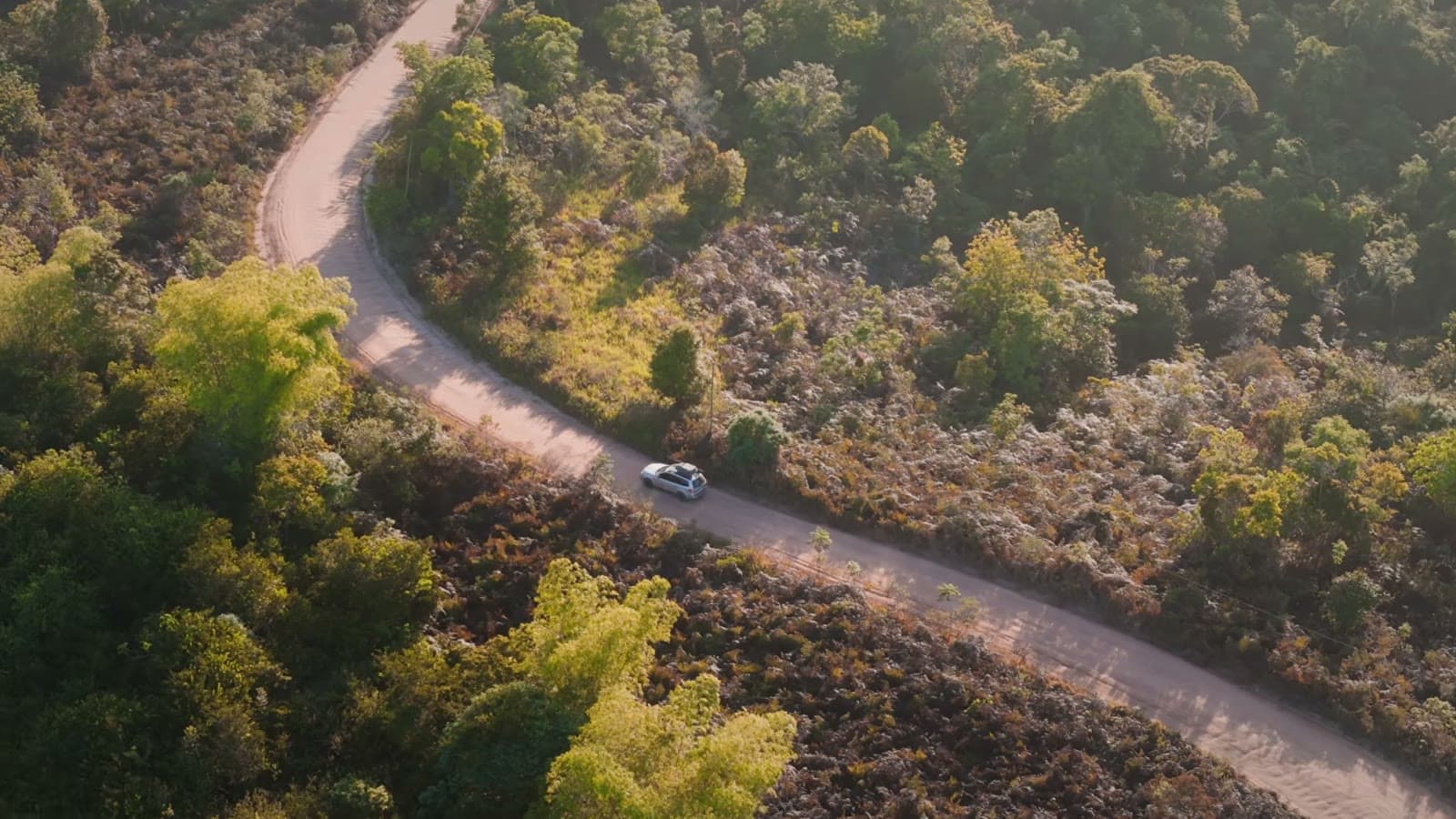
From Porto Alegre to Vitória, we drove mostly on paved roads. In Bahia, we faced stretches of packed dirt to reach beaches like Cumuruxatiba, Caraíva and Trancoso. These roads can be tricky, with potholes and rocks, demanding more attention. That whole region of southern Bahia is lots of sand and lots of dirt, and the whole car shakes.
Trouble with GPS
One of the biggest difficulties was getting to Caraíva, where I got lost on dirt roads, ending up with a route 70 km longer. I didn't know you can only drive into Caraíva coming from the south. Coming from the north, you leave the car in a parking lot and cross by canoe. I left Cumuruxatiba, went back to the BR-101, missed one of the turnoffs and, since I wanted to get in with the car, I had to take a huge detour on dirt roads, with no signal. A drive that should have taken 2 or 3 hours ended up taking 5 or 6. It was nothing serious, and it all worked out in the end.
Knowing the characteristics of Bahia's roads, like the BA-001, can help you avoid these setbacks. The only road that's paved all the way is the BR-101. The BA-001 is paved, but it doesn't run through every town on the coast: it ends at some points and then it's all dirt road.
Downsides of Traveling
Traveling constantly can be exhausting. We're always on the move and uncertain about what we'll find in new places, and whether we'll be welcome. One low point was in Búzios, at a hostel called Eco Palace Hostel. The hostel itself was really cool, a big old mansion with huge doors and windows, lots of common areas and plenty of nature around it.
The downside was the owner, who kept loud music on all the time for no reason, treated guests badly, and above all: treated the volunteers and the people who work there badly. I stayed a week and wanted to stay longer, but he complained about Nina and wouldn't extend my stay. I ended up going somewhere else.
What about camping?
Finding suitable places to park and camp can be hard; we often depend on people's goodwill. In Caraíva, I drove down every little street a car can get into, all of them deep sand. The campsites I found on Google Maps either didn't exist, didn't take pets, or didn't allow cars. In the end, I found a guesthouse near the beach, a bit away from the center, with an empty lot, just coconut trees, grass and sand, where I could park and camp, paying a small nightly fee. The owners were super friendly, gave me electricity and I could use the guesthouse bathrooms.
In Itacaré, I had to camp in a tent, which was tiring and less practical than sleeping in the car. I got to town around 5 in the afternoon, already getting dark, and the campsites I'd seen on Google Maps didn't take cars: they were for people arriving with a backpack and a little tent. I had to take a ton of stuff out of the car and pitch the tent, while with the car you just arrive, plug in, make the bed and you're done.
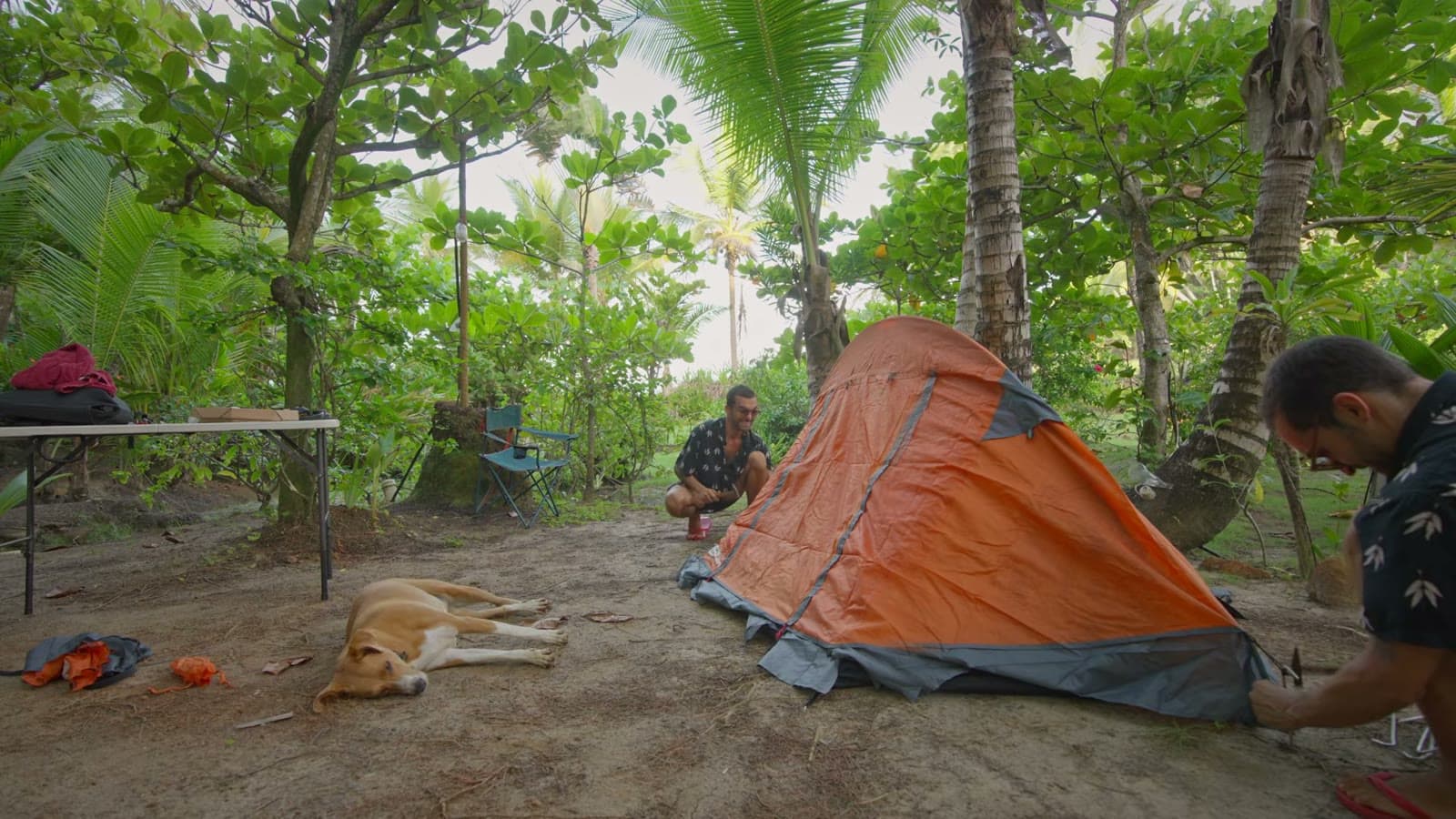
I spent three nights in the tent. The rain soaked everything at night, I moved to another campsite to sleep in the car, but it was too far out, and in the end, I rented an apartment for 15 days for more comfort and privacy. I spent a bit more, but I needed to do laundry, cook and work properly, and it's been wonderful. Living in the car is cool, it's fun, but sometimes you end up in a bit of stress that isn't so cool.
Upsides of Traveling
Traveling brings many positive experiences. We get to know natural wonders, new places and different people. One of the high points was New Year's Eve in Itaúnas, with its impressive dunes and beautiful beaches.
Benefits of traveling alone
Traveling alone allows flexibility and a daily lesson about ourselves. I feel we have more time to reflect and do what we really want, even though some moments are lonelier. Some days I don't know anyone in town and end up skipping an outing, because we don't always wake up ready to go explore the world. Traveling alone has been an exercise in understanding the moments when I want to be productive, working, editing and writing, and recognizing the moments when I just want to lie in bed watching a series.
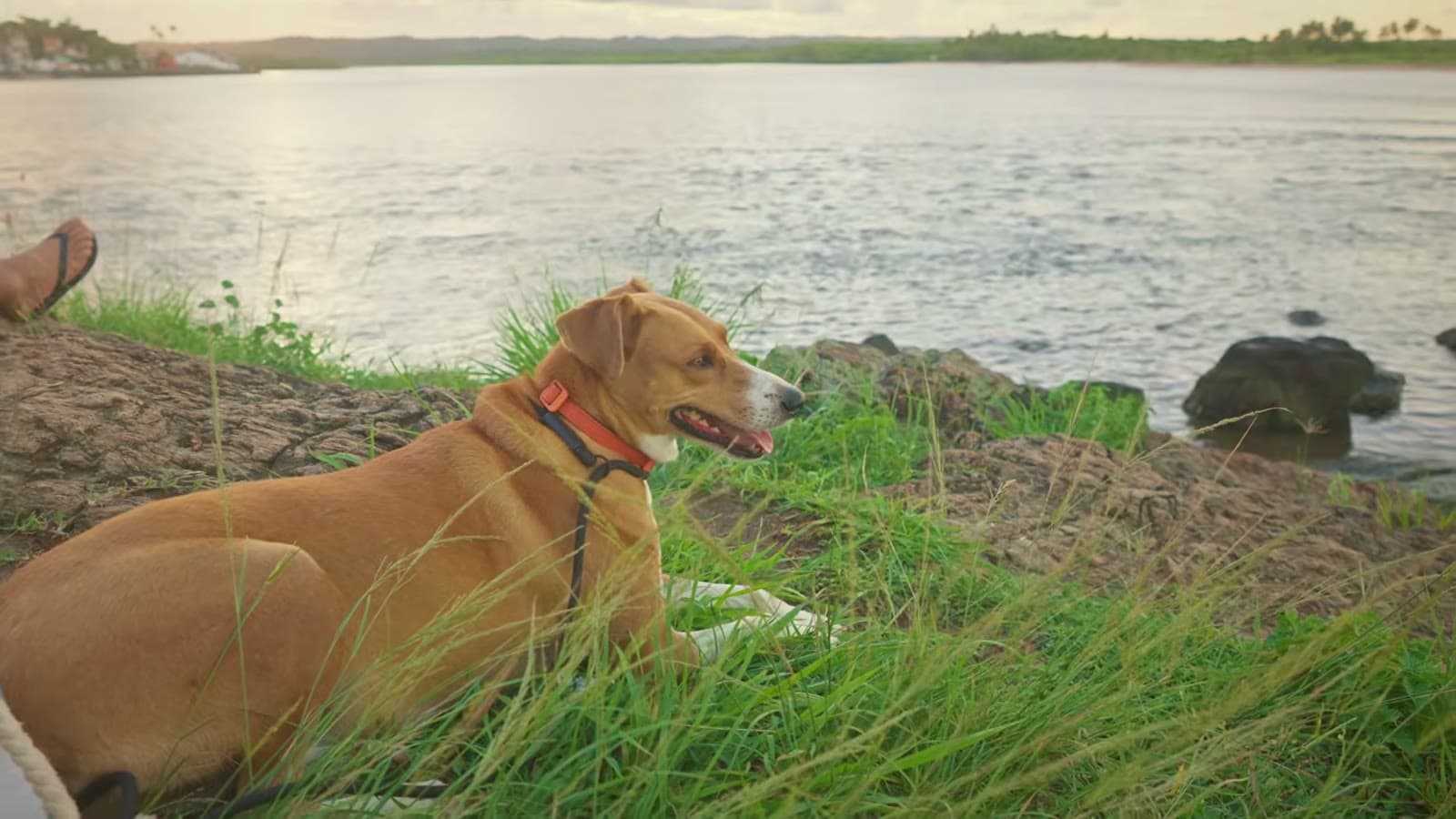
Because I have Nina, I feel our walking routine keeps a sense of normality and connection with the place we're in. Whether in an apartment or living in the car, I always walk her in the morning and in the late afternoon, and that's when I see people on the street and the life of the town. That's super positive.
Meeting different people and places
I met many other travelers, like a Colombian woman with a kitten and a French couple. This sharing of experiences is enriching. I visited many destinations I wouldn't have seen otherwise, like the coast of Rio de Janeiro and Espírito Santo. Each place has a unique beauty and its own character.
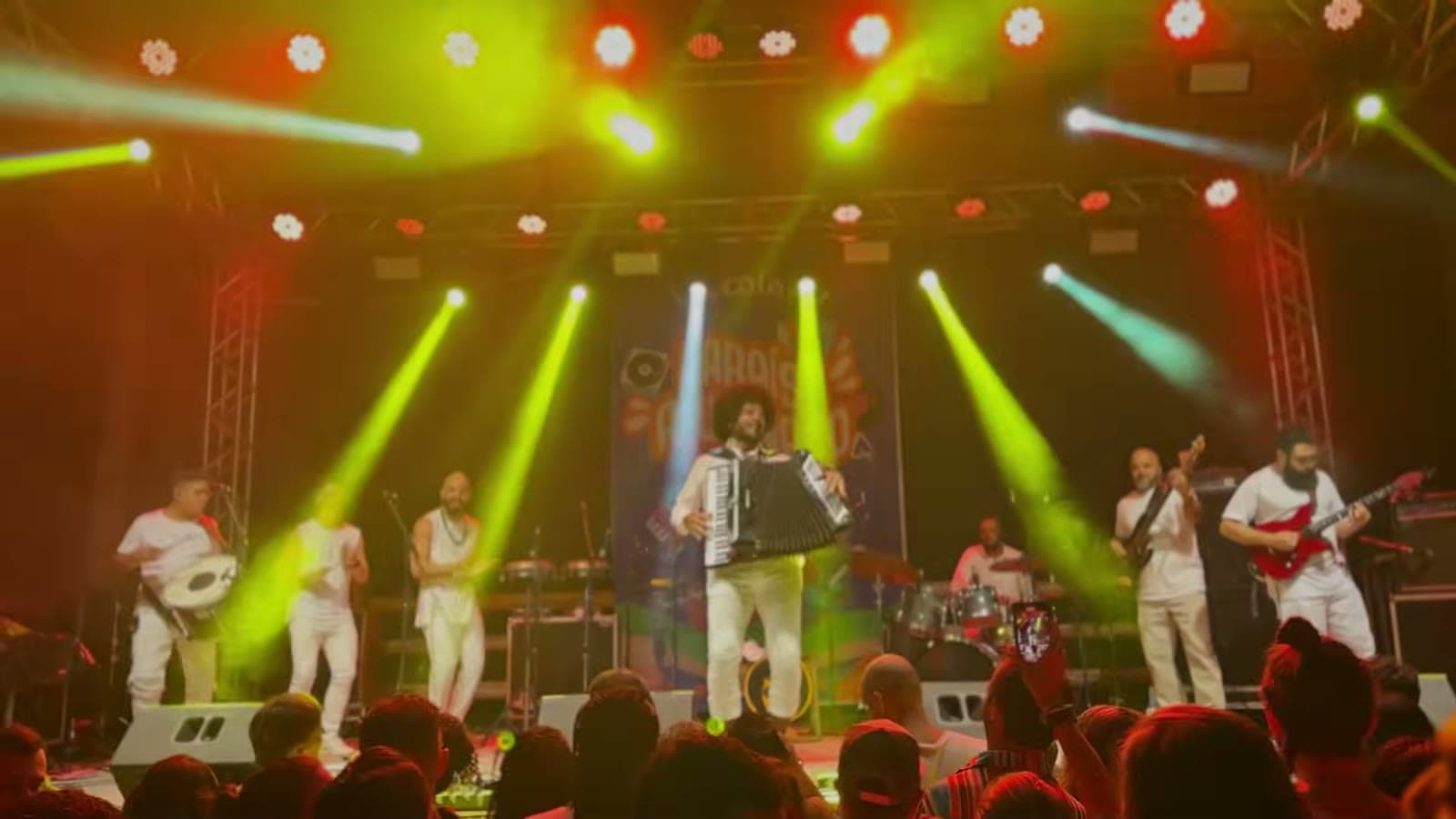
In Rio, I got to know Arraial do Cabo, Cabo Frio, Búzios and also Sana, up in the mountains. In Espírito Santo, I went through Guarapari, Vitória and Itaúnas. The Itaúnas dunes are almost a desert, and the town is known as the capital of forró. On New Year's Eve, I caught a show I wasn't even expecting: Mestrinho, at Buraco do Tatu. It was amazing.
I got to Bahia in January and I've been here for about 4 months now. The whole coast is really beautiful, there are lots of beaches, and each place has its own quirks.
All in all, this 5,000 km journey across Brazil has been a mix of hardships and paradises. The road gives us unforgettable moments and a lot of personal growth. If you're thinking about traveling, remember to prepare well and stay open to the surprises along the way. Traveling is an enriching experience, full of lessons and discoveries.
Tags
- # 5,000km
- # road trip
- # rio grande do sul
- # bahia
- # travel